Do Oura, Whoop and Garmin Measure the Same Thing? Tested Over 637 Nights
A ring, a strap and a watch, worn together for 637 nights. HRV and heart rate match almost perfectly. The morning scores? That is another story.

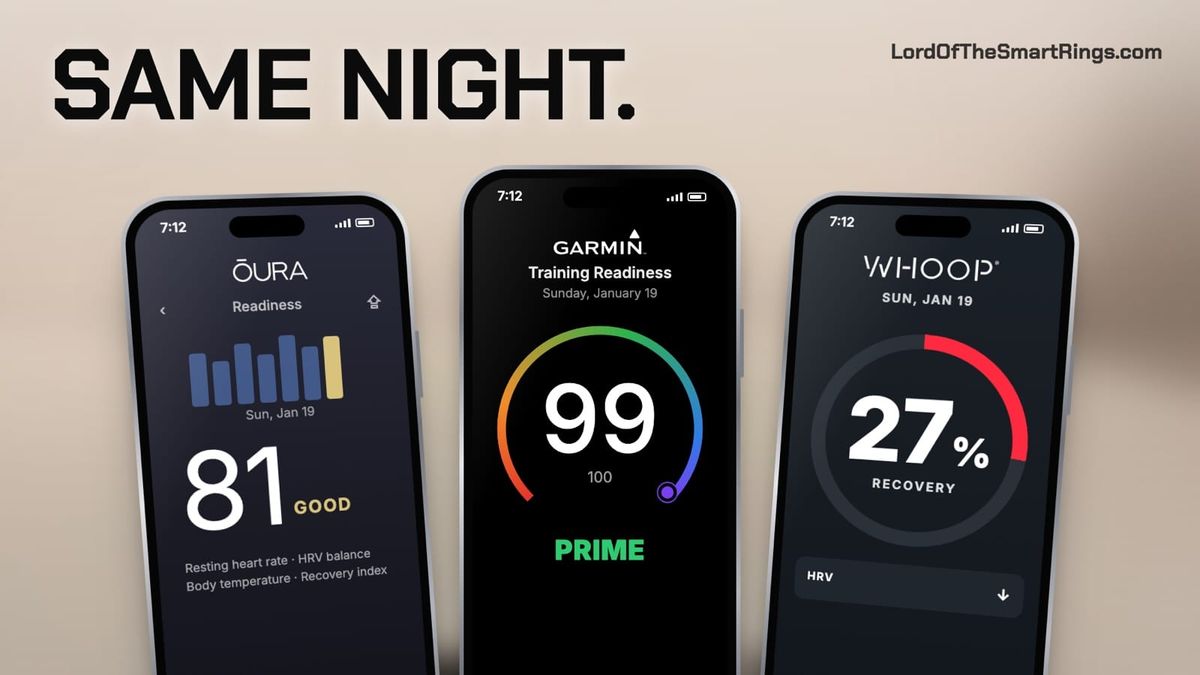
A ring, a strap and a watch. All day and all night. All three at once, for almost two years straight. Do Oura, Whoop and the Garmin Fenix 8 measure the same thing? And can you even compare them?
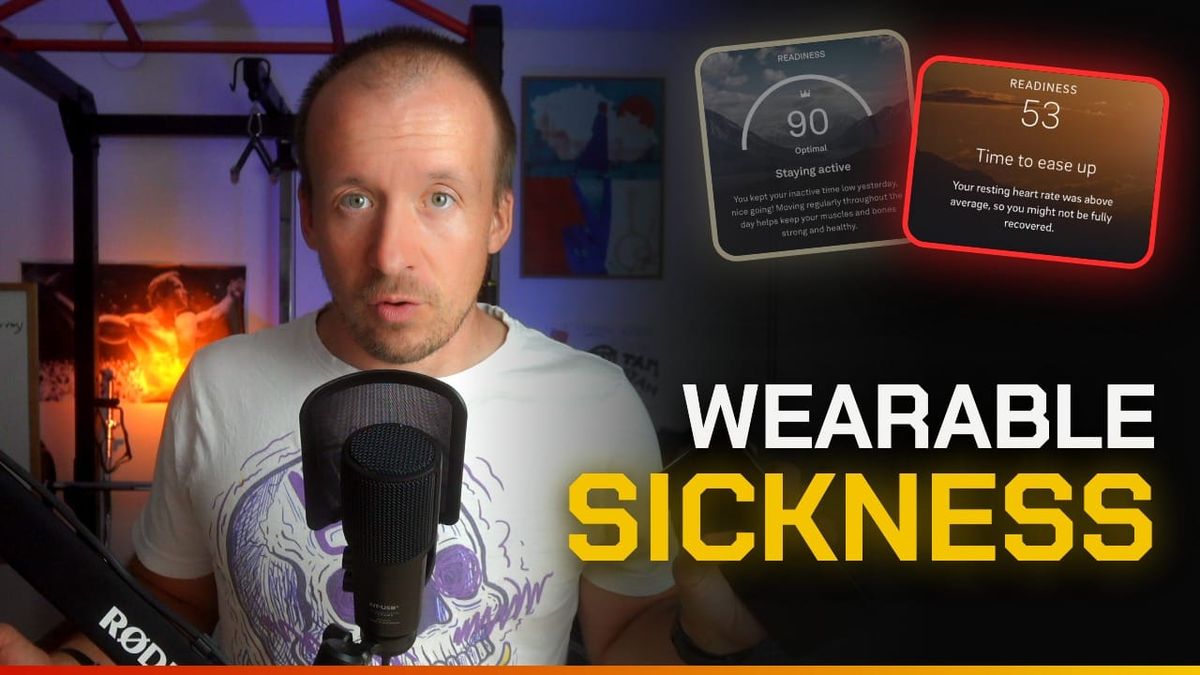
Here is what one morning looked like:
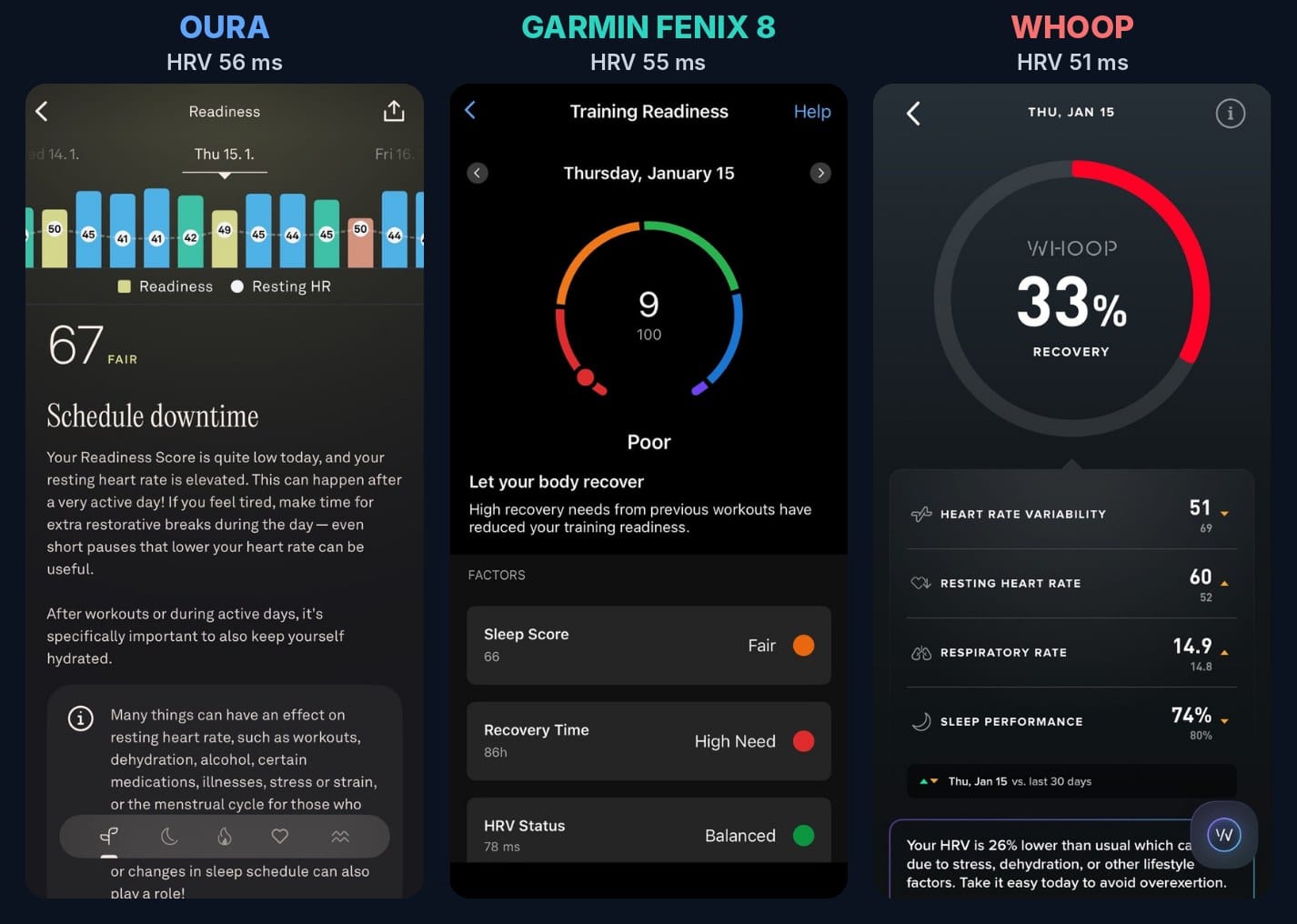
Each one is the top dog of its category: a smart ring, a screenless strap, a sports watch. Conceptually they could not be more different, and yet they have a lot in common.
On two things they agree almost to the decimal point. On one thing, though, they can disagree so badly that one sends you to the gym and another sends you back to bed. And at the end, I will do the math on which one quietly costs you the most.
Let me start with the two metrics all three are built on.
💓 Heart stuff: HR and HRV, who copied whom?
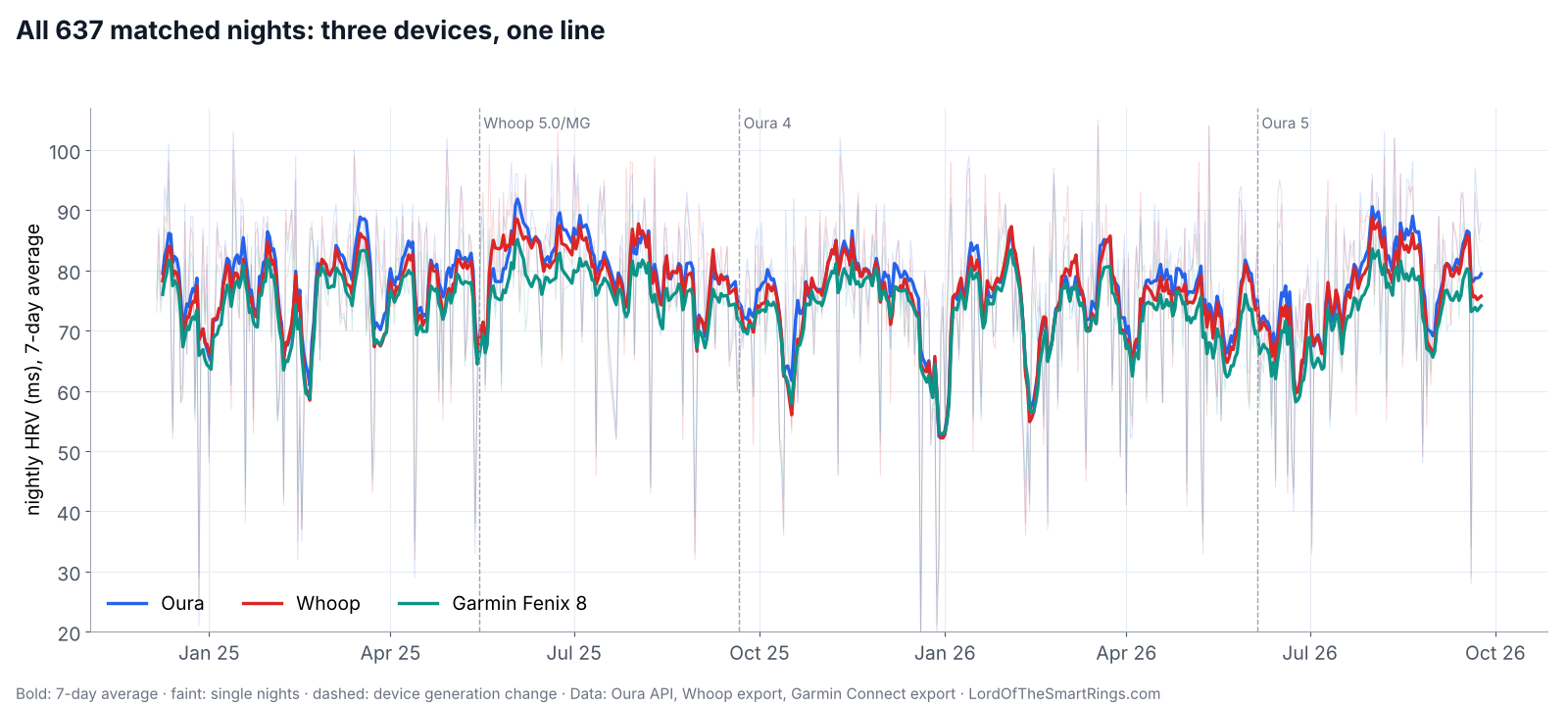
The first one is HRV (heart rate variability): how much the gaps between your heartbeats vary. The most basic reading says high HRV means a rested body, low HRV means fatigue, stress or illness. All three devices calculate it overnight with the same method (RMSSD).
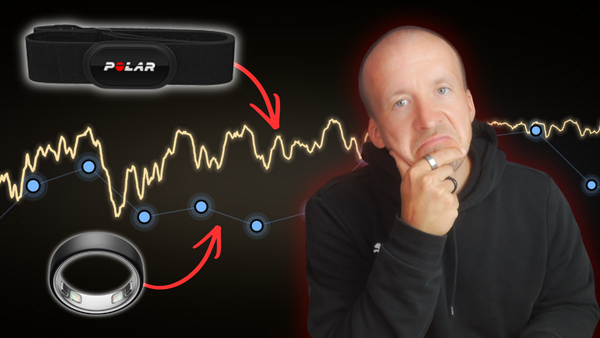
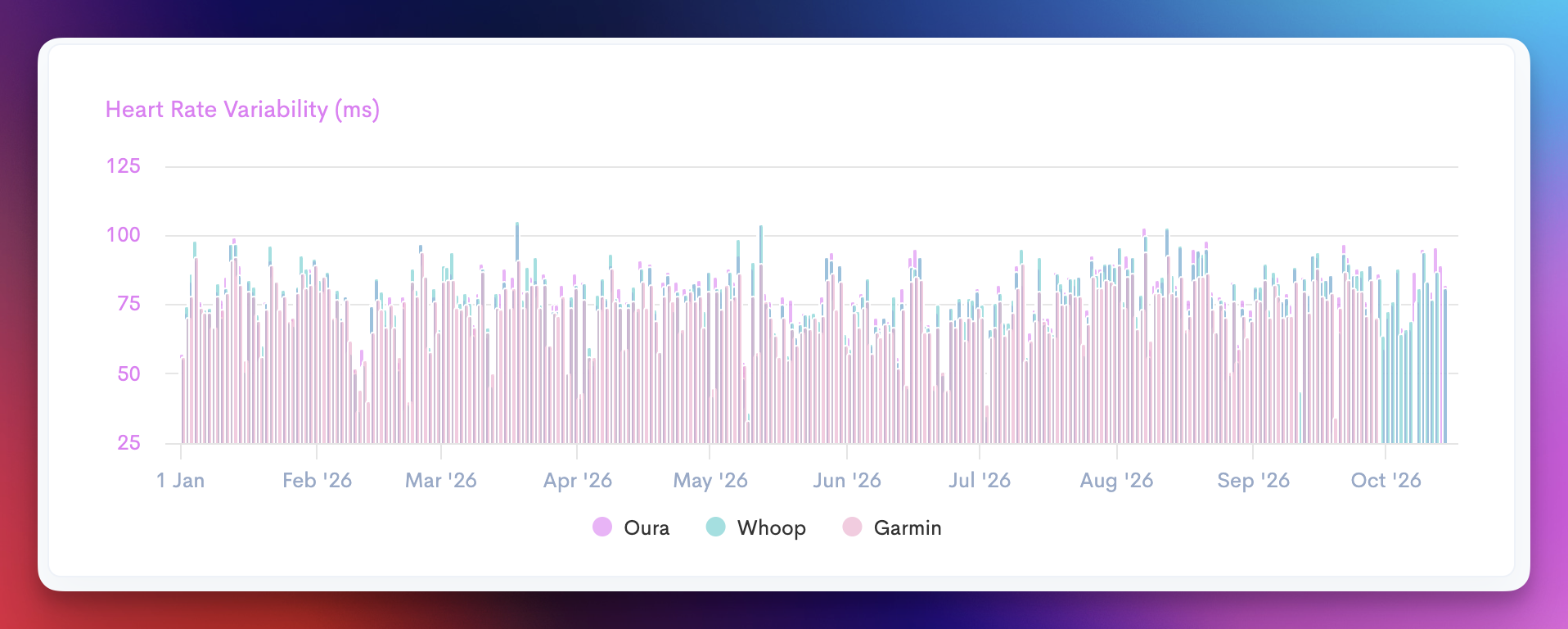
And they get almost the same result. The correlation between any two of them is 0.97. A perfect copy would be 1.0. When my HRV dropped overnight, it dropped on all three. They agreed on the direction on 95% of nights. And it held through two Oura generation changes and one Whoop upgrade.
And HR, heart rate? Even more boring, in the best possible way. Oura and Garmin differ by less than one beat per minute on an average night.
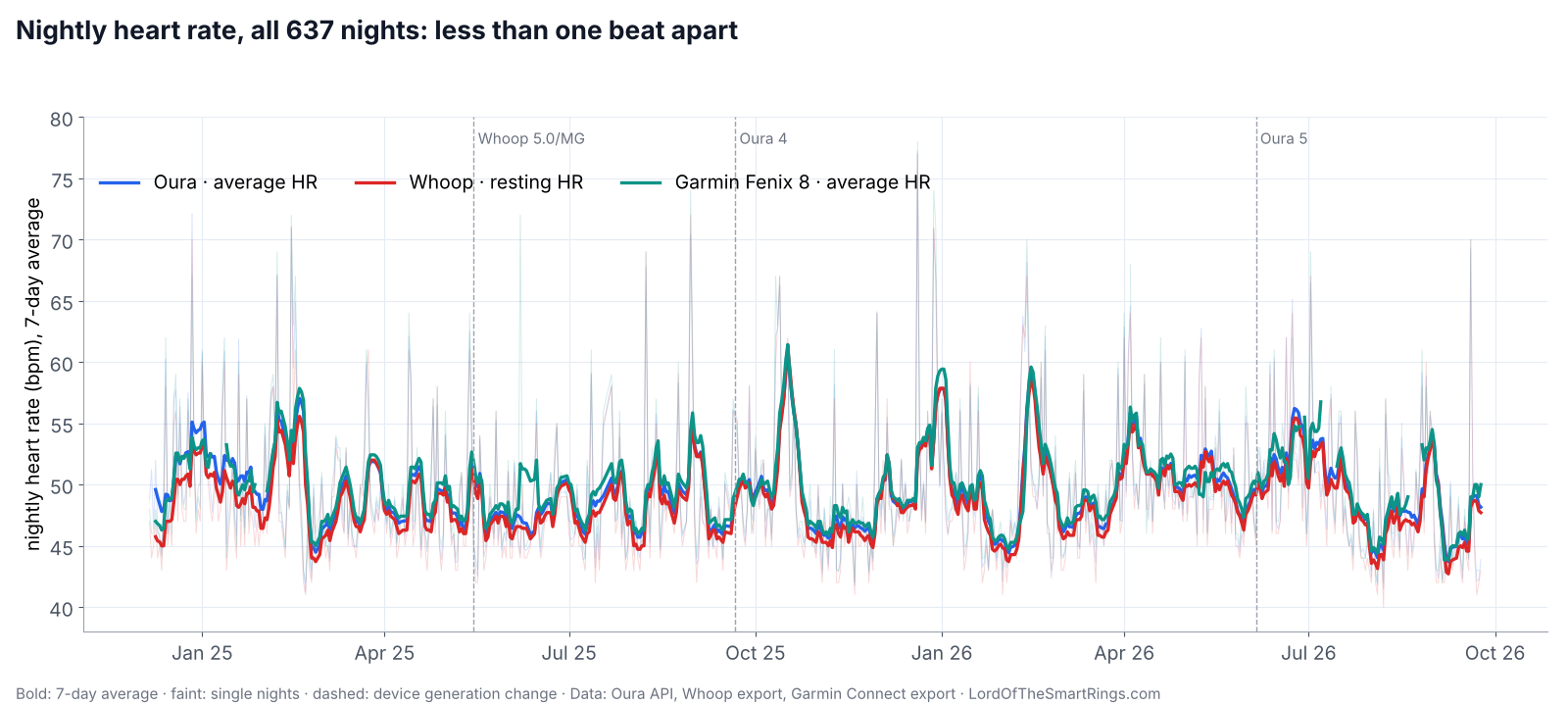
So the optical sensors on all three wearables agree on these basic heart metrics. It would be weird if they gave different HR and HRV readings. The small differences most likely come from a slightly different detection of the sleep window (we are talking sleeping heart rate and sleeping HRV here).
But if all three served you the same heart rate and the same HRV as the headline number in the app, it would be a bit boring. And that is why…
…each app conjures up its own metric. A score. And that is where they start to drift apart.
🚦 The scores
Oura's showcase is called Readiness. Garmin takes the sporty angle with Training Readiness, and Whoop goes full athlete with Recovery.
Let me show you some real mornings.
| Morning | HRV (ms) Oura / Whoop / Garmin | Oura | Whoop | Garmin |
|---|---|---|---|---|
| Jan 19, 2025 | 38 / 44 / 41 | 🟡 81 | 🔴 27% | 🟢 99 |
| Jan 5, 2025 | 88 / 87 / 81 | 🟢 85 | 🟢 93% | 🔴 38 |
| Feb 2, 2025 | 83 / 85 / 80 | 🟡 84 | 🟢 83% | 🔴 27 |
| May 26, 2025 | 61 / 63 / 60 | 🔴 67 | 🟡 40% | 🟢 100 |
Morning of January 19, 2025. HRV 38, 44 and 41 ms. Roughly half my normal on all three devices. And the morning scores? Garmin 99, green, go train. Whoop 27%, red, take a break. Oura somewhere in between.
Who got it wrong? Nobody. Each score is answering a different question.
⌚ Garmin asks "can you train today?", so it mostly watches your training load and recovery time, numbers that carry momentum from previous days.
📏 Whoop asks "how is your body doing today?" and leans mostly on the freshest HRV and heart rate values.
💍 Oura asks "how have you been lately? And how was last night?" and adds temperature and activity to the mix. And none of them publishes the exact formula.
All three landed on the same color on only 37% of mornings. Sounds like a dramatic split. But the opposite extreme, where one shows green and another shows red, happened on just 8% of mornings. Most of the time they are not arguing about the direction. Just about the shade.
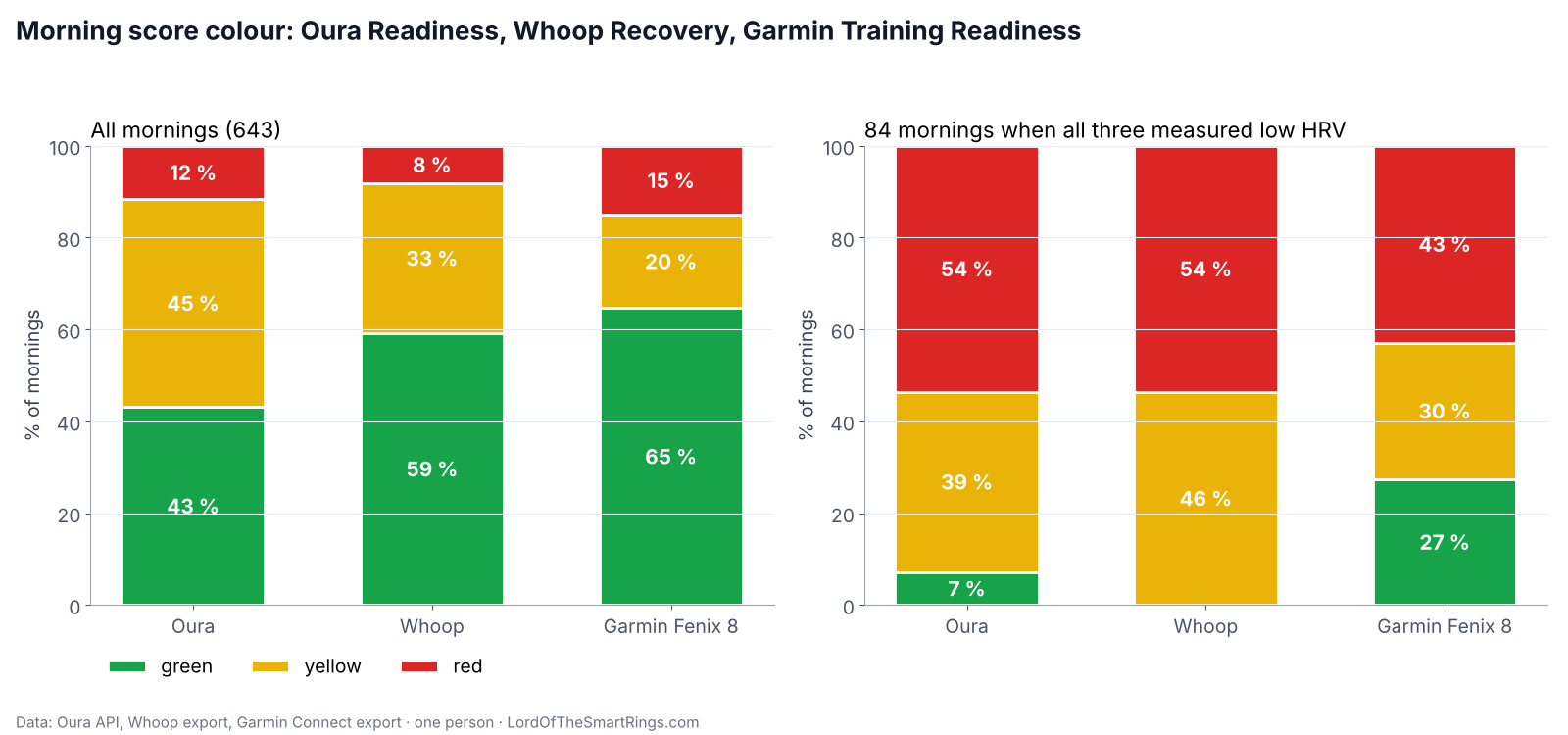
And the worse it gets, the more they agree. When Oura showed one of its worst mornings, Whoop and Garmin were in their own lower half 94% of the time. The big dips hit all three at once.
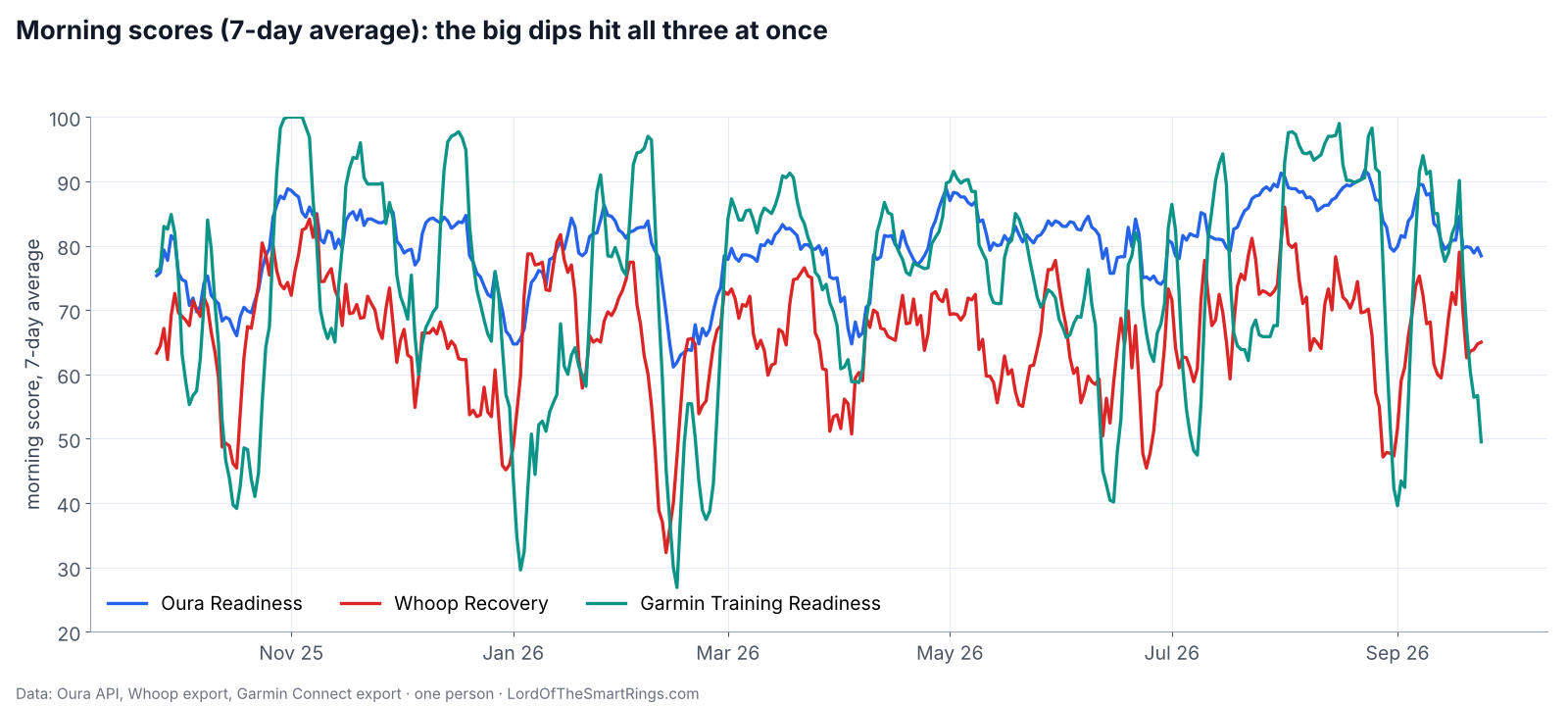
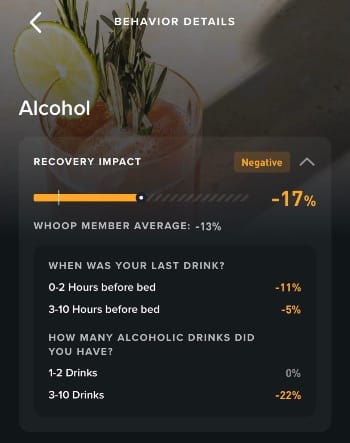
So on calm days, the score is more of a hint on whether to push a bit more or a bit less. The chart also shows that Whoop is the strictest: Recovery drops brutally low more often. That is because it puts the most weight on HRV dips, and it is quick to punish a less-than-healthy lifestyle.
🤒 What about temperature?
I find tracking skin temperature deviation from your own baseline a genuinely useful metric.
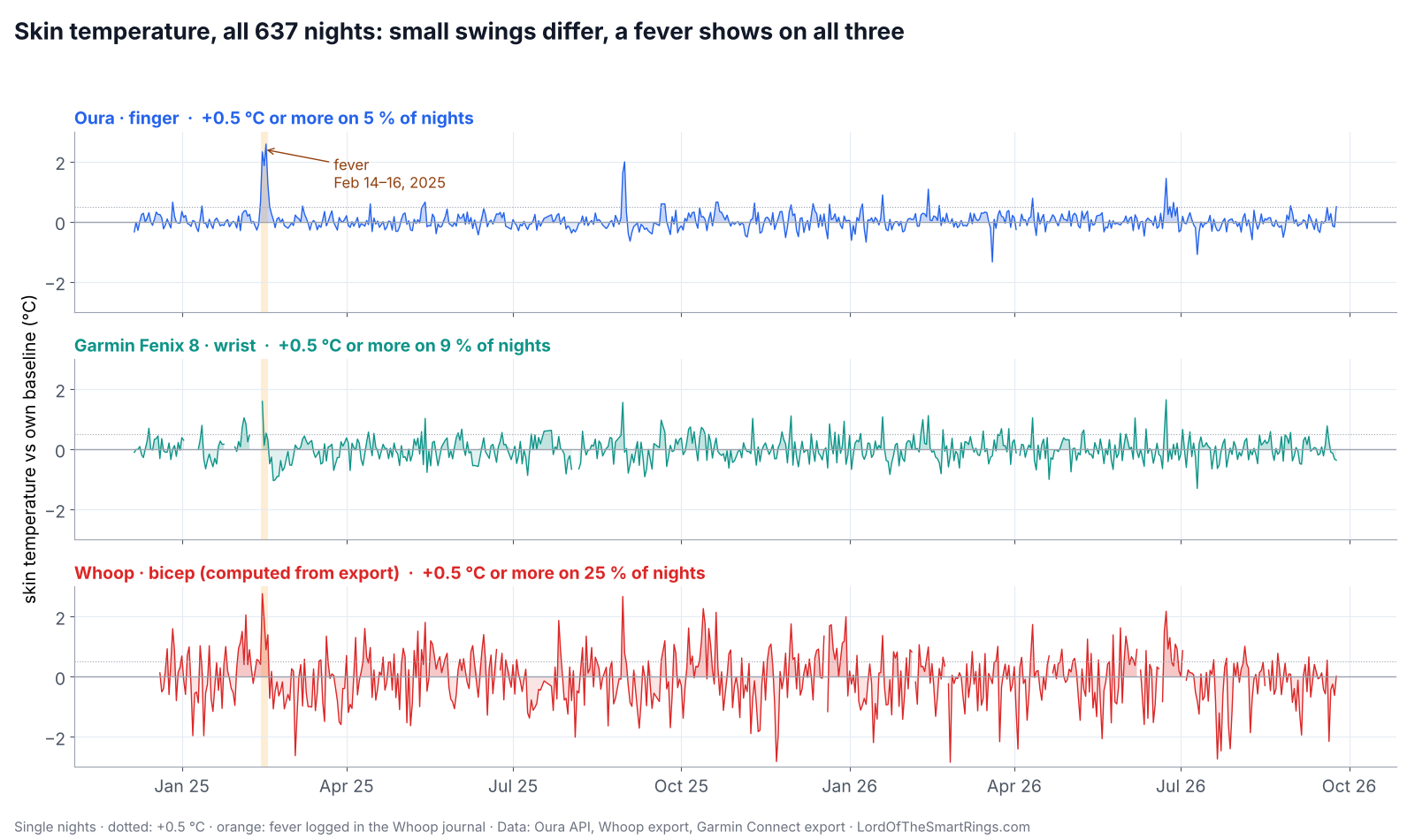
All three measure it. But I did not give them equal conditions. Oura measures on the finger, Garmin on the wrist and Whoop on the bicep, and your arm spends some nights under the duvet and some on top of it.
Based on my long-term observation, Oura is the calmest when it comes to temperature, and Whoop on the bicep jumps around the most.
In February 2025 I caught a fever. Oura and Whoop both showed more than +2 °C, Garmin about +1.6 °C. HRV dropped to almost half and all three scores turned red. Here they really do the exact same thing.
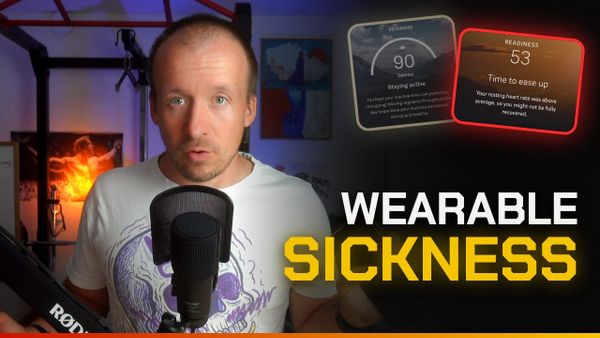
Let us get back from temperature swings to scores. A score is an interpretation by the device, not a measurement. Let it run your life too much and it can actually hurt you. There is even a name for it: orthosomnia.
 LORDoftheSMARTRINGS
So now we know who measures what, and how. But who charges how much for it?
💸 What it costs over two years
Oura and Whoop want a subscription, each in its own way. Garmin (definitely) does not need one. I calculated two years, because that is roughly how long my Oura stays in good shape. After that the battery fades noticeably and it is anyone's guess when it calls it quits. Garmin and Whoop, on the other hand, last longer.
| Device | Hardware | Subscription, 2 years | Total, 2 years | Per month |
|---|---|---|---|---|
| ⌚ Garmin Fenix 8 (47 mm AMOLED) | ~$850 | $0 | ~$850 | ~$35 |
| ⌚ Garmin Forerunner 570 | $550 | $0 | $550 | $23 |
| 💍 Oura Ring 5 | $399 | $140 | $539 | $22 |
| 💪 Whoop MG (Life) | included | $718 | $718 | $30 |
| 💪 Whoop 5.0 (One) | included | $398 | $398 | $17 |
US prices as of October 15, 2026: Oura Ring 5 and Forerunner 570 from the official stores, Fenix 8 at its typical street price after the Fenix 9 launch, subscriptions from the official sites (Oura $69.99/year, Whoop One $199/year, Whoop Life $359/year). Prices in Europe are higher.
On day one, the Fenix is the most expensive of the bunch. But it is a one-off payment. Whoop never sells you the hardware, it is included in the membership and you get a lifetime warranty for as long as you pay. The catch: you pay forever. The MG with ECG and blood pressure insights needs the top Life tier, and around year two and a half it overtakes the Fenix. Garmin does have an optional Connect+ subscription, but a colleague who paid for it for a whole year concluded that the average user does not need it. Everything I compared here, Garmin does for free.
And the watch does not die after two years. Over four years, the Fenix still costs about $850, two Oura rings with membership about $1,080, and Whoop MG about $1,440. If all you care about is HRV and a morning score, a cheaper Garmin like the Forerunner 570 does the job, also with no subscription.
🏆 Why I would buy each one, and what bugs me
Let me step away from the data and the emptied wallets and get practical: why I like these three, and what still bugs me after two years of wearing them.
Disclosure: some links in this article are Amazon affiliate links. As an Amazon Associate I earn from qualifying purchases — it costs you nothing extra and helps keep these tests independent.
⌚ Garmin Fenix 8
Why I want it: maps, accurate GPS and the LED flashlight, independence from my phone and a huge ecosystem of accessories. I swear by the Garmin Varia bike radar light, for example.
What bugs me: sleeping with it. It is a serious chunk of metal on your wrist. But I got used to it.
💍 Oura 5
Why I want it: miniaturization. A whole lab in a few grams. And the Health Radar feature, which watches long-term signals like breathing during sleep or blood pressure estimates. It builds on the earlier Symptom Radar.
What bugs me: the subscription (not for me personally, I have lifetime) and a battery that fades after about two years. Oura 5 vs Oura 4.
💪 Whoop
Why I want it: the bicep fit, the vibrations, the battery, the most polished journaling and the AI Coach.
What bugs me: the most expensive subscription in this comparison and overpriced accessories. Whoop 5.0 / MG review.
Want to compare your own devices? Habit Dash connects Oura, Garmin and Whoop for free…

…and shows the data side by side:
To wrap it up
I compared seemingly incomparable wearables. They differ in hardware, software, business model, where you wear them, ecosystem, accessories, charging. Everything!
And yet it is satisfying to see them agree on the basic metrics. How the data is then presented comes down to who each brand is targeting and what suits you.
So do they measure the same thing? At heart, yes. In their advice, no.
Who is your favorite?
🔬 How I measured (for the data nerds)
Period: December 6, 2024 – September 24, 2026, 637 nights with valid data from all three devices, matched by wake-up date.
Data: Whoop from the in-app data export, Oura via the official API, Garmin from the Garmin Connect export.
Generations: Whoop 4.0 until May 14, 2025, then 5.0 / MG. Oura Gen3 until September 20, 2025, then Ring 4, and Ring 5 from June 5, 2026. Garmin: the same Fenix 8 the whole time. HRV agreement within each period r = 0.95–0.99.
Numbers: HRV Oura–Whoop r = 0.975, Oura–Garmin 0.977, Whoop–Garmin 0.973. Of 108 "bad" nights (HRV well below the 4-week average), 84 were flagged by all three. Temperature: correlation 0.35–0.51, a clear rise on all three at once on only 12 of 595 nights.
Limits: one person, so this is about how the devices agree with each other, not about accuracy across a population. For most nights I have no ECG or chest strap. Garmin Training Readiness is a readiness-to-train score; I compare it with the other two as "morning advice".
Sources: Dial M. B. et al. (2025), Physiological Reports, doi:10.14814/phy2.70527 · Doherty C., Altini M. et al. (2025), Translational Exercise Biomedicine 2(2) · Kräuchi K. et al. (1999), Nature 401 · Baron K. G. et al. (2017), J Clin Sleep Med 13(2).