I Measured 28 Smart Rings by Hand: The Smart Ring Database Is Live
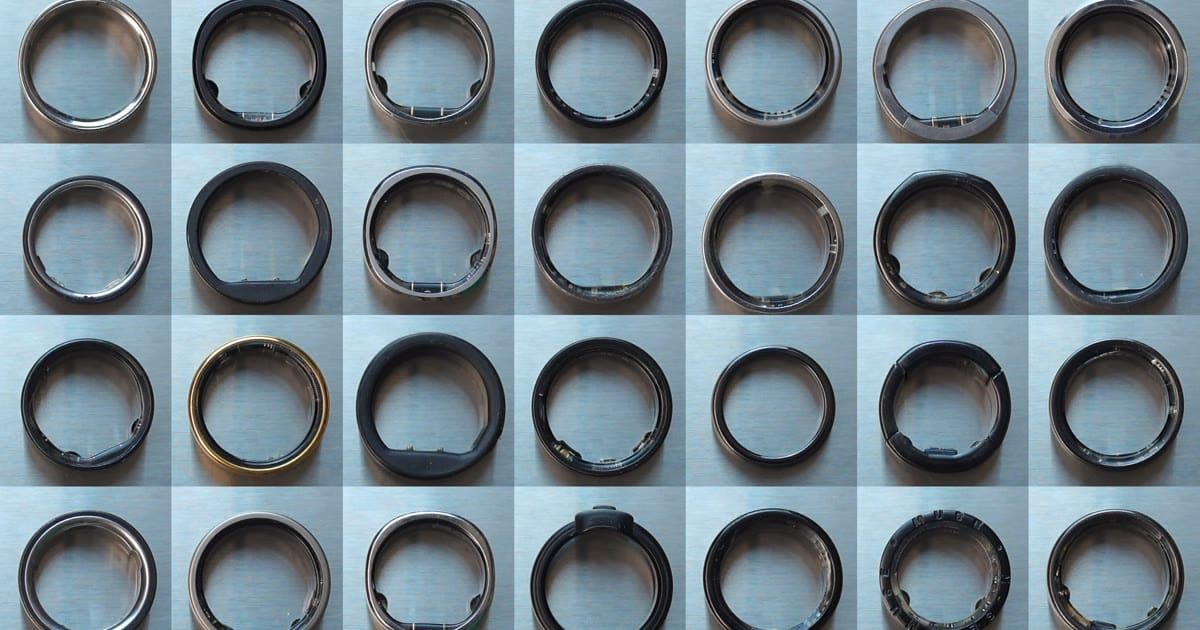
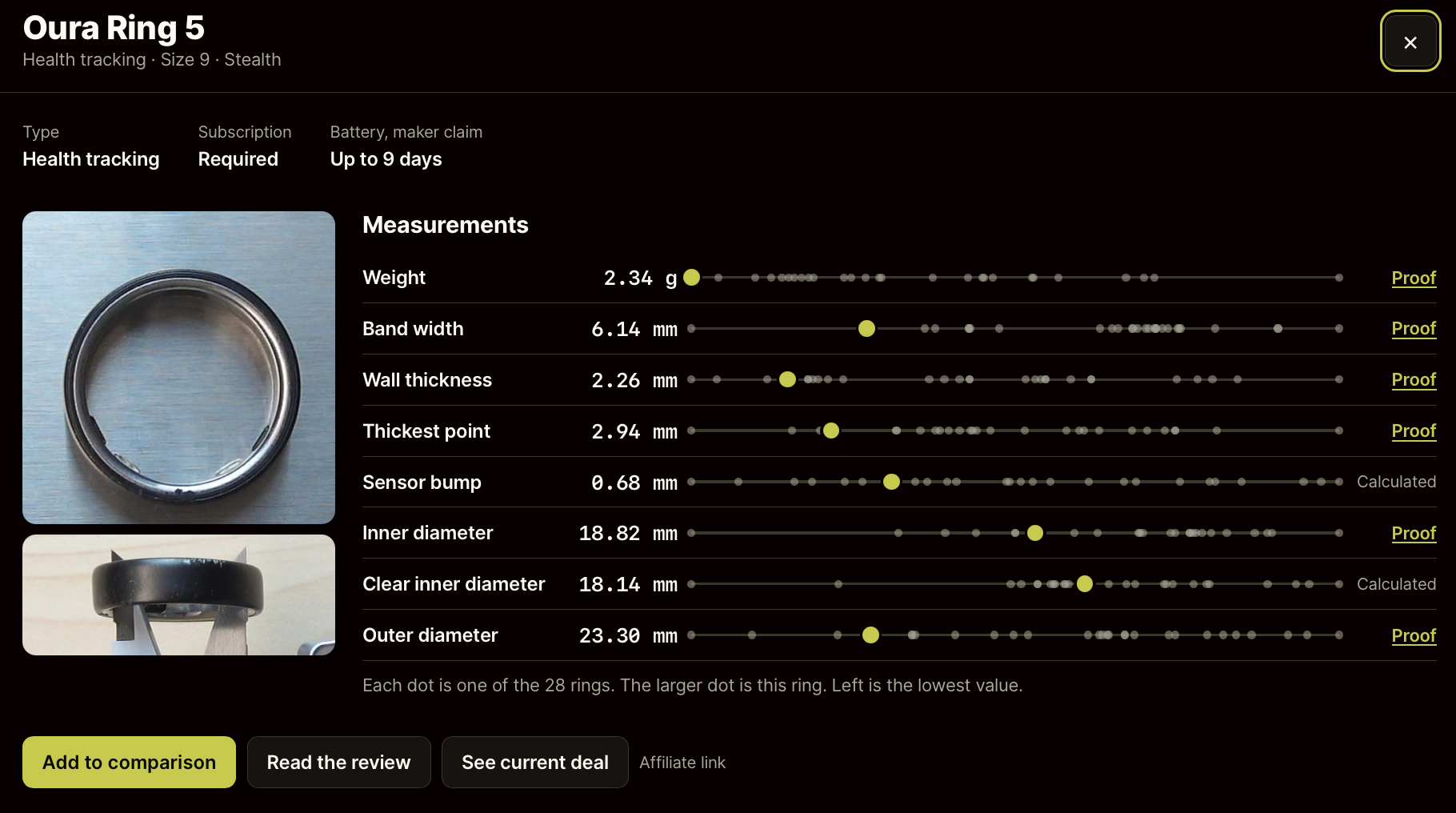
I put all 28 of my smart rings on one bench and measured them with the same caliper and scale: weight, band width, wall, thickest point, inner and outer diameter. Every number has a photo. Size 9 is not one size, and the free database lets you compare rings at real size.

Smart rings are so small that every millimetre counts, down to tenths and hundredths. I already struggle to picture the difference between a 47 mm and a 52 mm watch face, let alone the differences between tiny smart rings.
Spec sheets and marketing materials can be misleading, so a transparent comparison helps. The numbers get trickier because of the wide range of ring sizes. Most of my smart rings fit my index and middle fingers and are sizes 9 to 10 (every smart ring maker sizes a little differently).
In short, I took all 28 smart rings I have, put them on one bench and measured them myself.
Open the Smart Ring Database →
What's in the database
- Weight, band width, wall thickness, thickest point, and inner and outer diameter for every ring, measured with the same caliper and the same scale.
- A photo of the display behind every single reading. If a number looks odd, you can check it yourself.
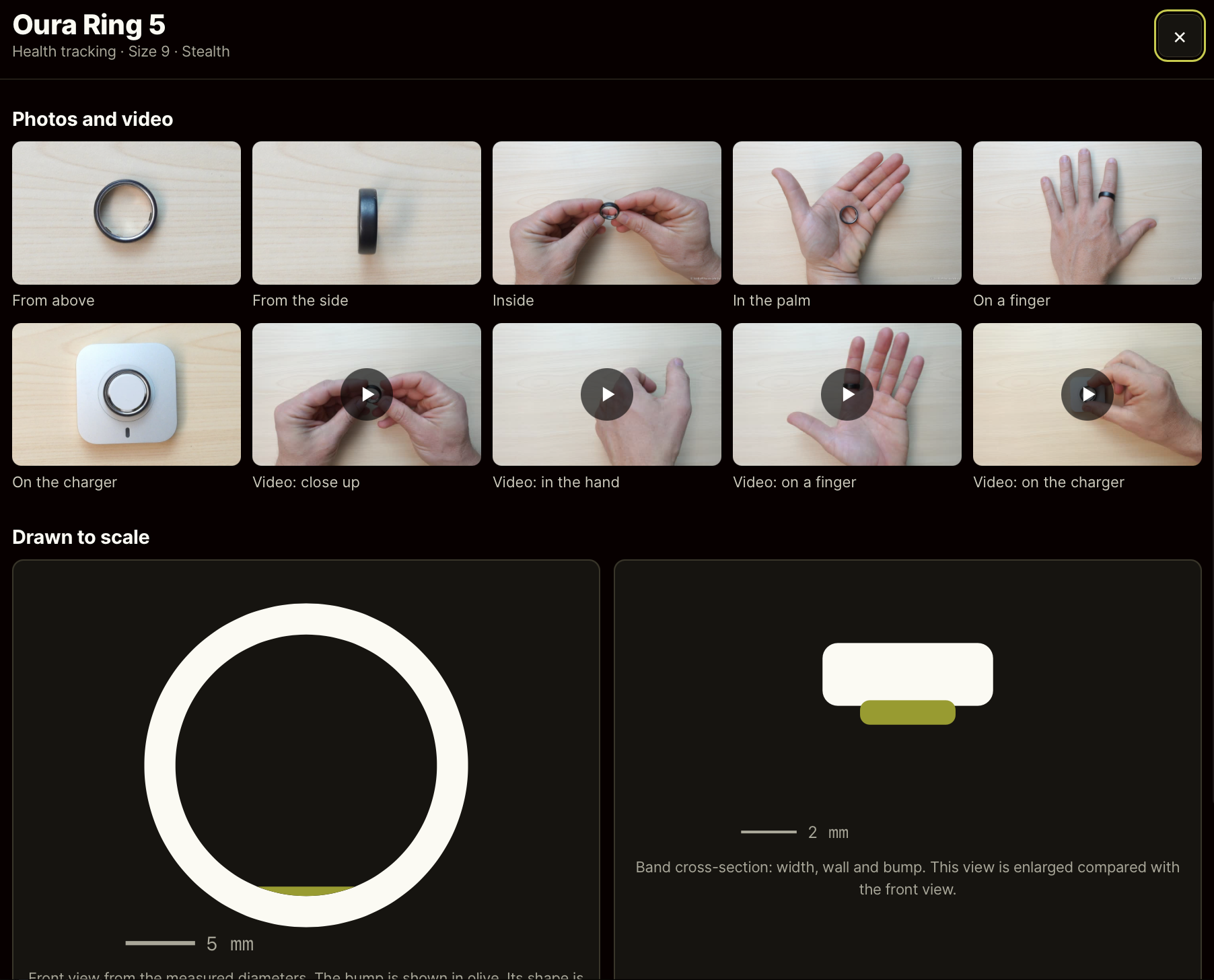
- Compare up to four rings at true scale, or see them at real size on your screen using a bank card.
- Filters for health, payment and voice rings and for ring size, plus a fit estimate against the ring you already wear.
- Photos and short videos of every ring: from above, from the side, in the palm, on a finger and on the charger.
I vibecoded my own measuring tool
I didn't want to type 170 numbers into a spreadsheet and hope I got them all right. So I vibecoded my own photo and measurement lab in Lovable: LOTSR Measurement Studio. A camera above the bench photographs every reading, the tool reads the caliper and scale displays automatically, and I check each value against the photo.
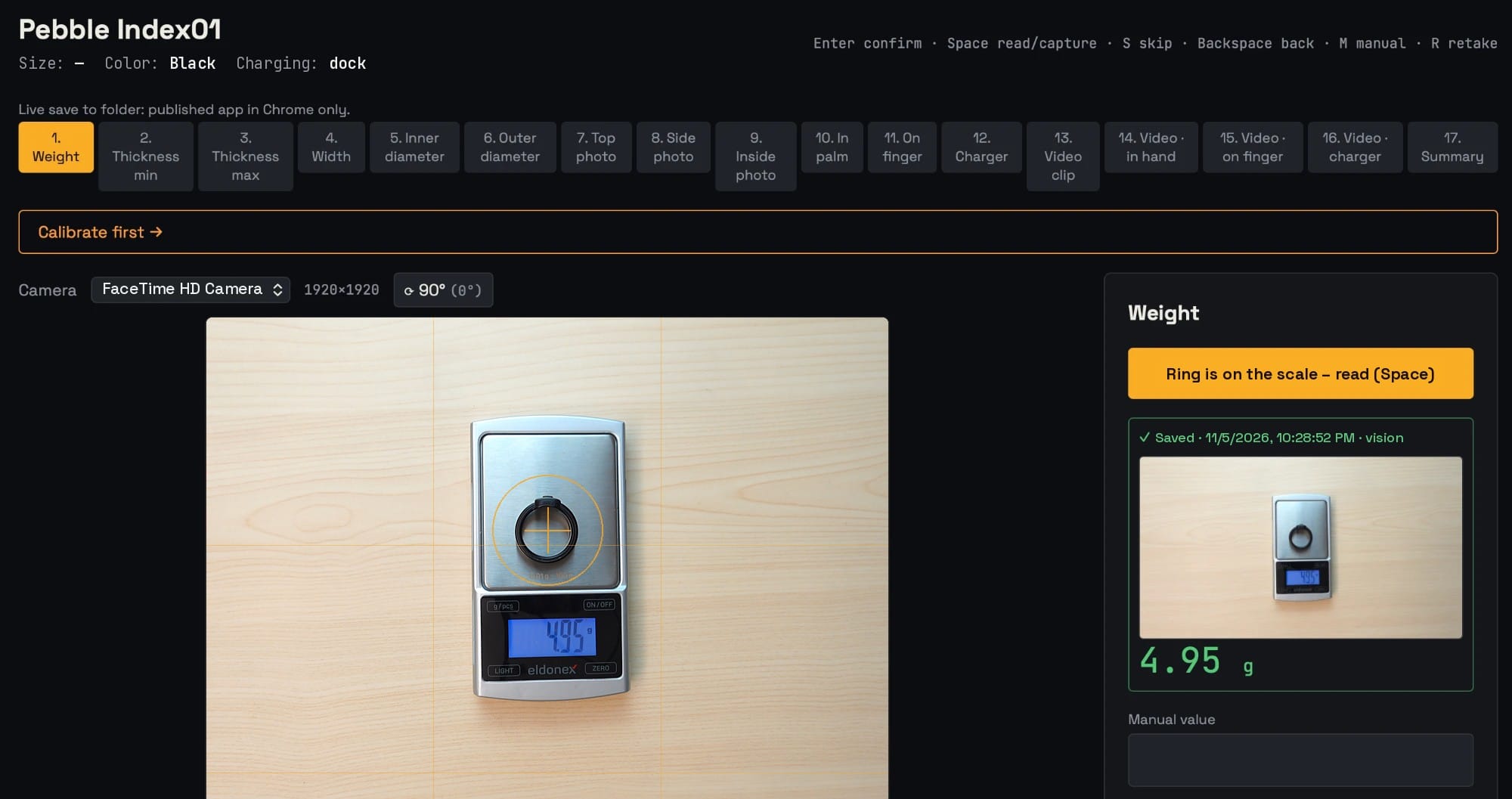
Every ring went through the same routine: weight, wall, thickest point, width, inner and outer diameter. Then a set of photos and videos on the same background. It's a careful bench test, not a lab report, so treat differences of a few hundredths of a millimetre as a tie.
Three interesting finds
- Size 9 is not one size. The inner diameter of the size 9 rings I measured ranges from 18.69 to 20.31 mm. That's a 1.62 mm spread, roughly two whole sizes.
- The lightest ring is the Oura Ring 5 at 2.34 g, just 0.01 g ahead of the Omni Ring.
- The slimmest builds: the Niceboy One has the narrowest band at 4.99 mm (note: it is a payment-only ring), and the RingConn Gen 2 has the thinnest wall at 2.07 mm.
Watch all 28 rings
In the video, I show every ring one by one, with all its photos and clips, so you can see how each one looks in real life.
Missing a ring?
The database will keep growing. If your ring isn't in it yet, suggest it, and I'll try to get it on the bench.