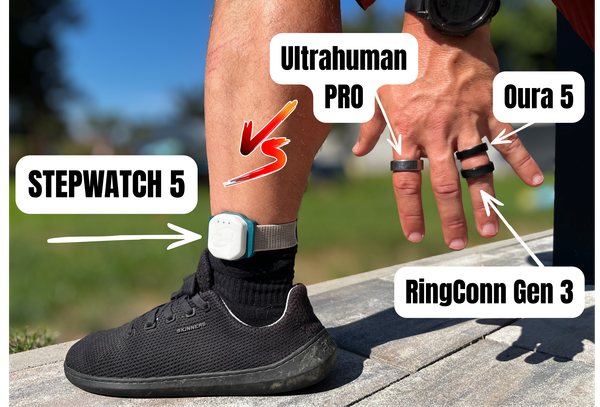
Oura 5 vs Oura 4: Part II — The Parallel Test!
The Oura Ring 5 is radically smaller and slimmer than the Gen 4. But does the miniaturization cost you anything in the data? I wore both generations on the same night to find out.

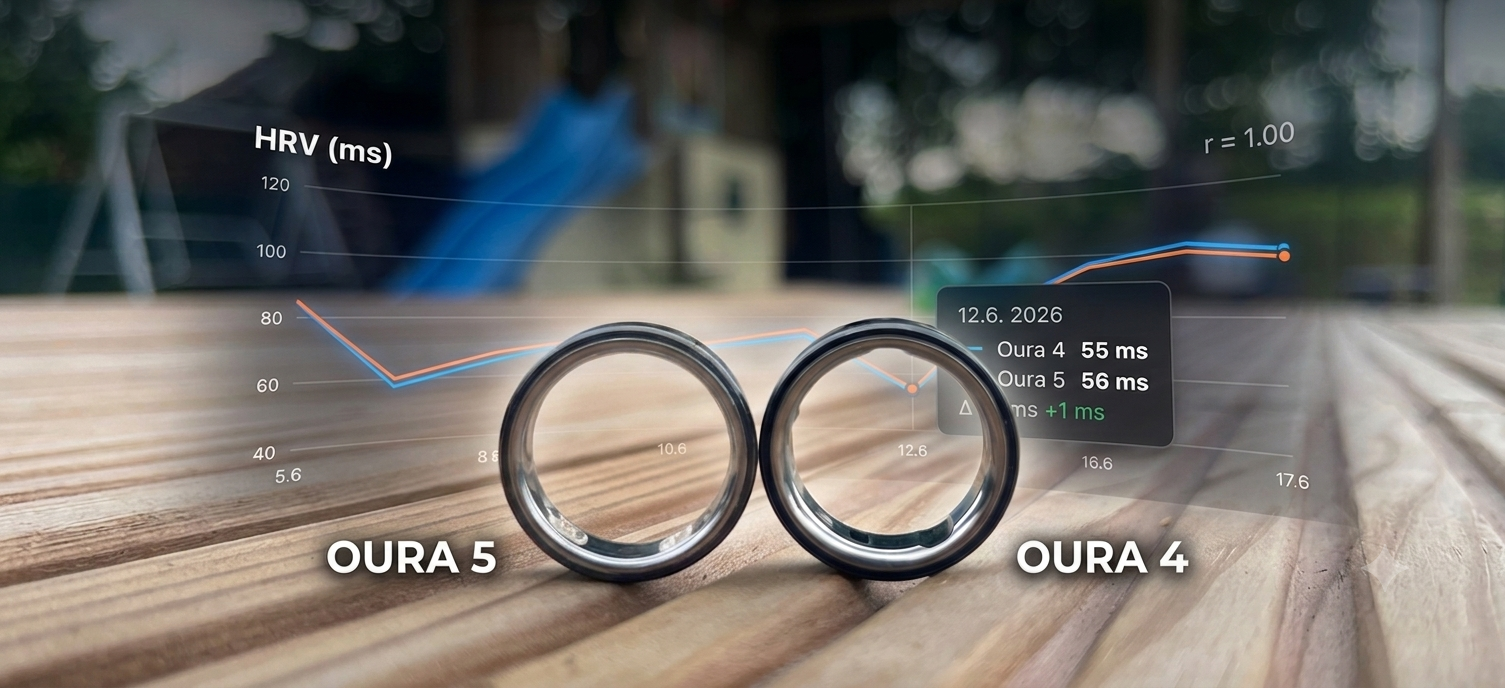
In hardware-loaded Part I, I promised to grill the new software features. Except new functionality lands in the Oura app gradually (the usual rollout pattern), and on top of that, availability depends on your country too — in this context, the US is actually the land of opportunity, getting to try new features earlier. So before we get to the software, let's run one more parallel comparison, this time based on the actual measured data.
 LORDoftheSMARTRINGS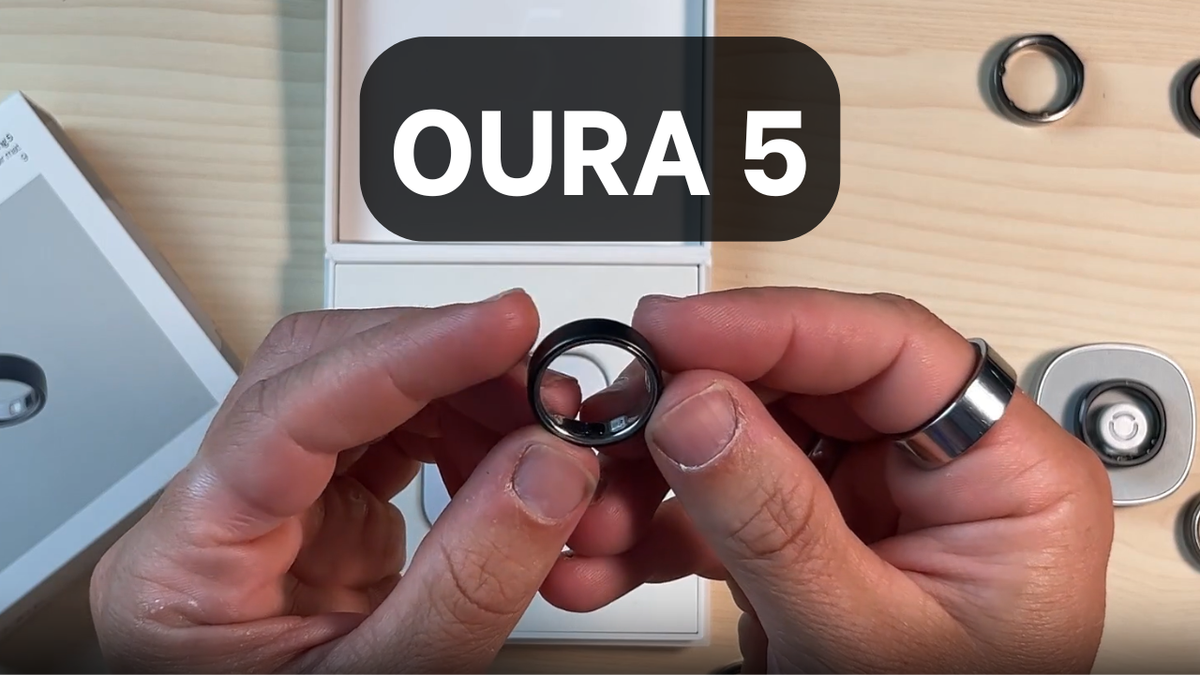
How Did I Measure?
Quite simply — I just wore both generations overnight, the Oura 4 and the Oura 5. This time (quite exceptionally) I don't have a referee in the form of a reference device (chest strap, sleep headband, etc.).
So I had to reactivate a secondary account on my second phone. Oura did offer a free month, but probably only for new users, since it charged me the moment I wrapped up testing.

That's something I'm not entirely used to — as an early adopter, I have a lifetime Oura membership, and I'm honestly hoping it'll be possible to pass it down to one of my sons someday...

So What Should You Actually Expect?
Great question! It would actually be pretty weird if both generations gave me different data. What can differ, though, is the wording of the Readiness recommendations, since those factor in historical data and long-term measurement context.
Comparing the Data
Where we should see near-perfect agreement is in the primary metrics calculated from the optical sensors — that is, heart rate and heart rate variability.
HR — Heart Rate and HRV (Its Variability)
And that's exactly what happened. Wherever there is a difference, it's most likely down to the most basic thing of all — physics. I won't dive into deep theory here, but the alpha and omega of optical sensors is how well the ring fits you, whether it rotates around your finger, and so on. And even though both Ouras fit me really well, the Oura 5 sits a touch snugger — and that alone could play a role...
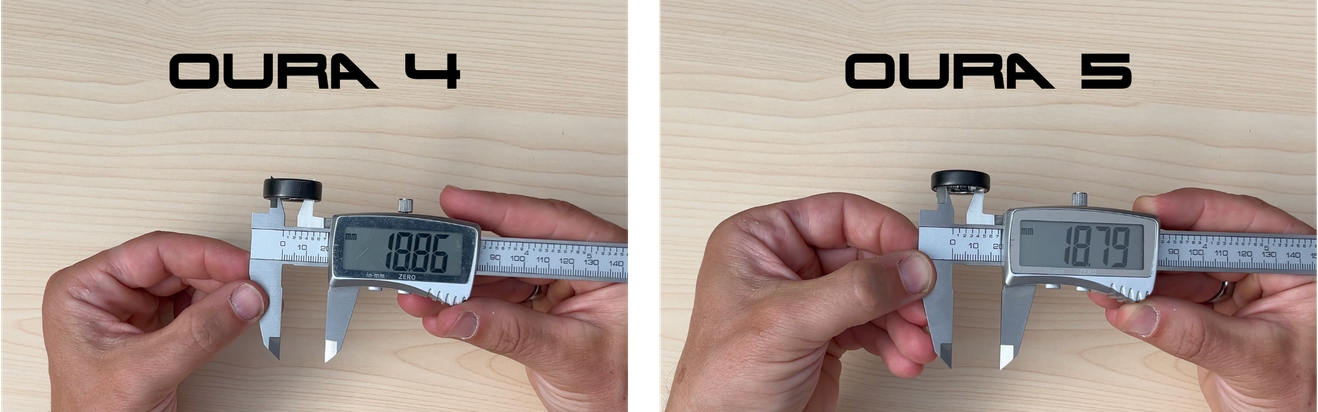
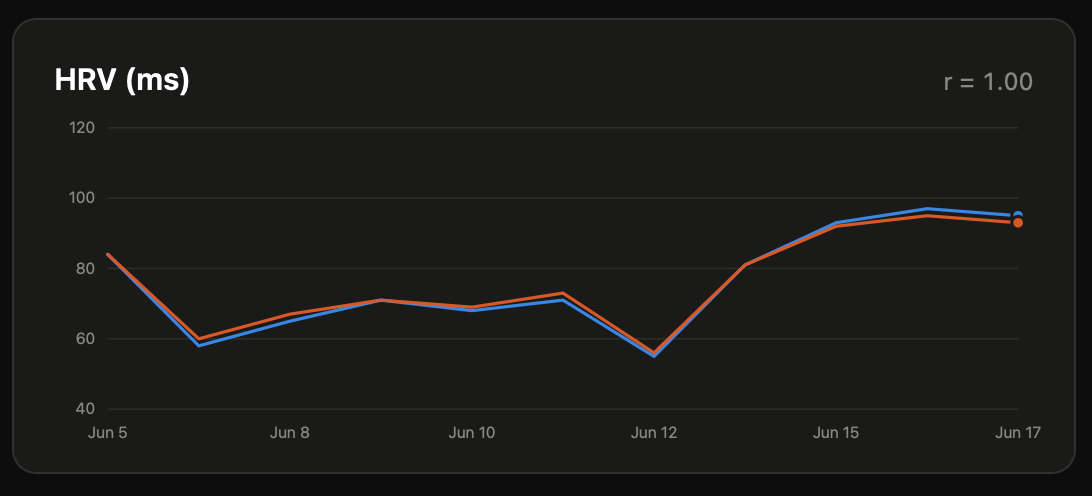
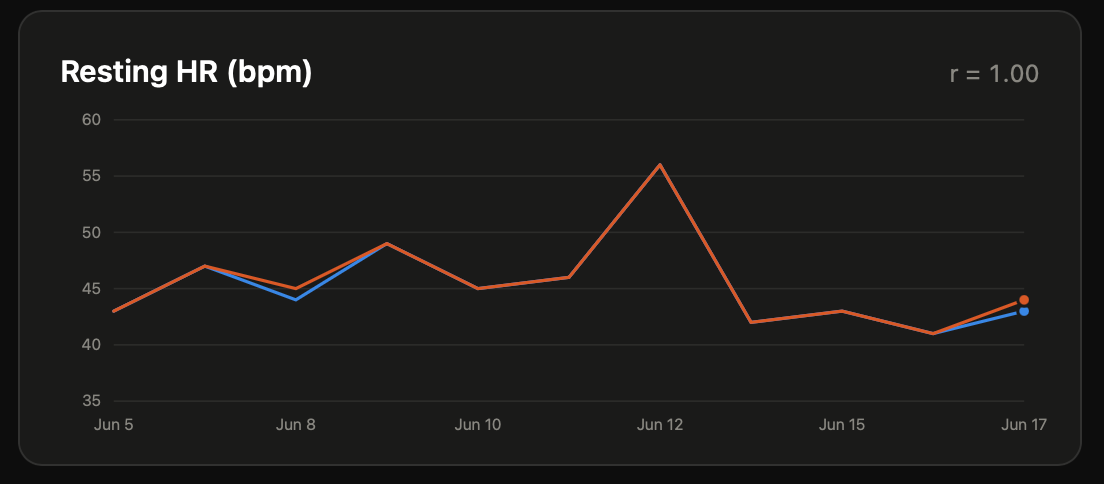
HRV and HR almost identical
Readiness and Sleep
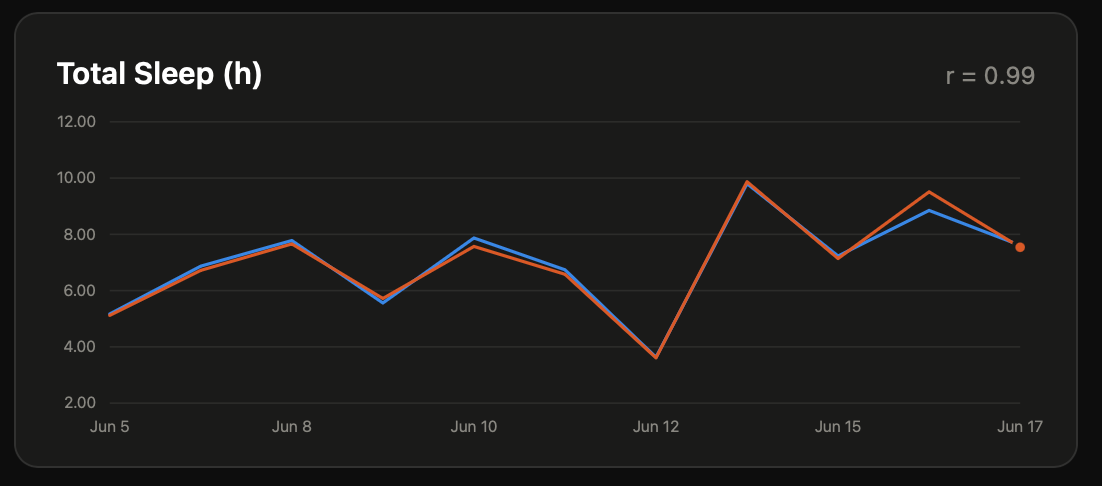
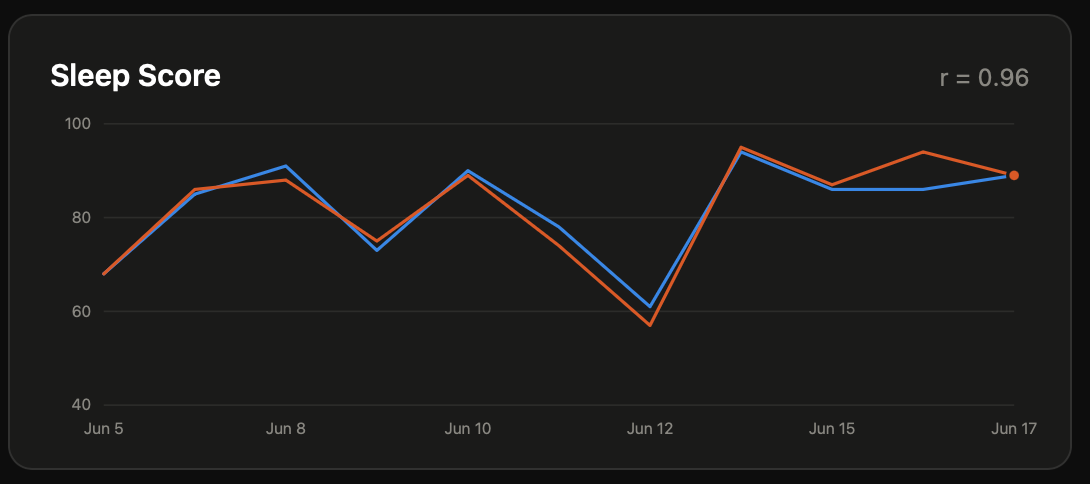
These two key heart-related measurements feed into further derived metrics — first and foremost the calculated sleep metrics, as well as the overall Readiness score. So it's no surprise that here, too, we see strong agreement.
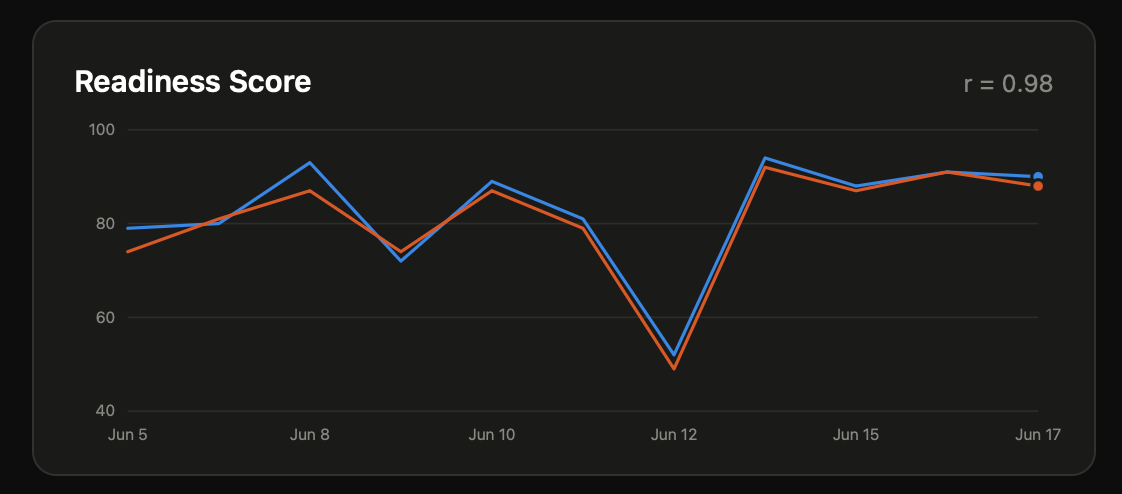
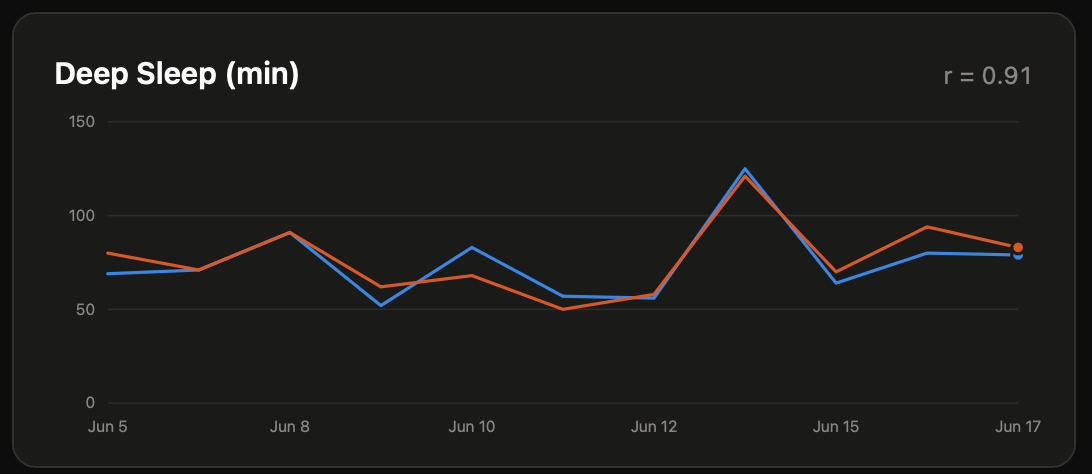
Other metrics
In Conclusion
What's the takeaway? That data-wise, the Oura 4 measures every bit as well as the Oura 5. From this perspective, no need to upgrade if you have Oura 4.
That said, if you're after smaller dimensions, the Oura 5 is the better — and, as usual, pricier — choice. Battery life on the Oura 5 is a hair better, though I don't think that comparison is entirely fair, since my units aren't the same age, and smart ring batteries tend to go downhill fairly quickly.
In the next article, we'll take a look at the software updates related to Oura 5.