Wearables & Age metrics
Six wearables, six different ages. From Garmin's Fitness Age to Oura's Cardiovascular metrics, we break down the algorithms, proxy data, and clinical accuracy of the world's leading smart devices. Stop guessing and start understanding your physiological trends.

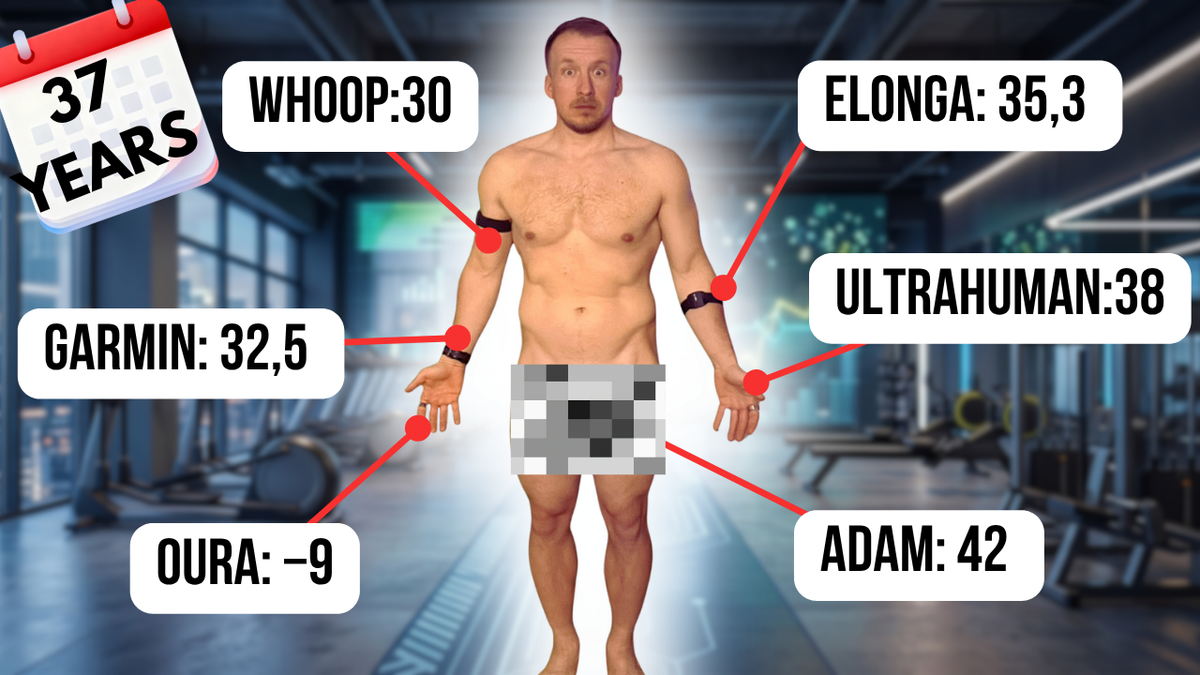
Garmin: 32.5
Whoop: 29.6
Oura: minus 9
Elonga: 35.3
Ultrahuman: 38.
Adam Sensor: 42
Calendar: 37 years
Six wearables, each gives a different number and uses the word “age.” Why don’t they agree? Because none of them actually measure age. They all infer it — each from a different proxy metric, using a different algorithm, with a different set of assumptions.
Hard to make sense of it, right? So let’s break it down 👴
Basic Terminology
Let’s first bring some clarity into this:
- Chronological age – the number of years since birth. It’s precise, but physiologically almost useless.
- Biological age – a clinical estimate of how worn your body is, based on biomarkers from blood tests and DNA.
- All other “ages” – essentially marketing labels used by commercial wearables. And those are what we’ll focus on here, specifically:
- 🏃 Garmin Fitness Age
- 💍 Oura Cardiovascular Age
- 🔗 Whoop Age
- 💓 Elonga Functional Age
- 🧠 Ultrahuman Age
- 🍆 AndroAge
Now let’s break down each of these “ages” — or rather, the approaches behind them.
🏃 Garmin Fitness Age
Years ago, Garmin acquired the algorithm from Firstbeat Analytics. Along with it came VO₂max estimation (maximum oxygen uptake during exercise), which became the core of Fitness Age 1.0.
Later, Garmin decided to boost sales of its smart scales and introduced Fitness Age 2.0. This version also factors in activity intensity, resting heart rate, and body fat percentage (from a smart scale).
My result: 32.5 (chrono −4.5)
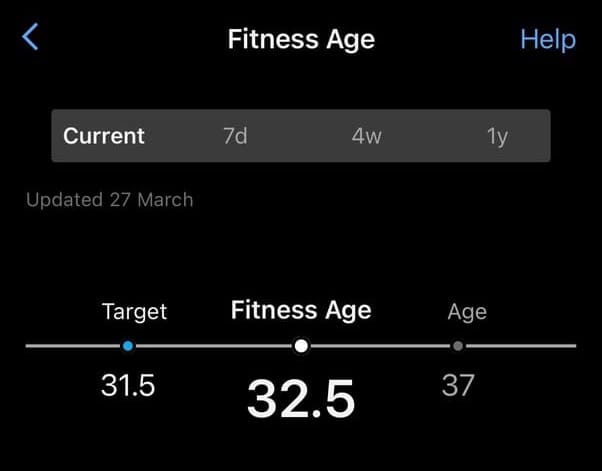
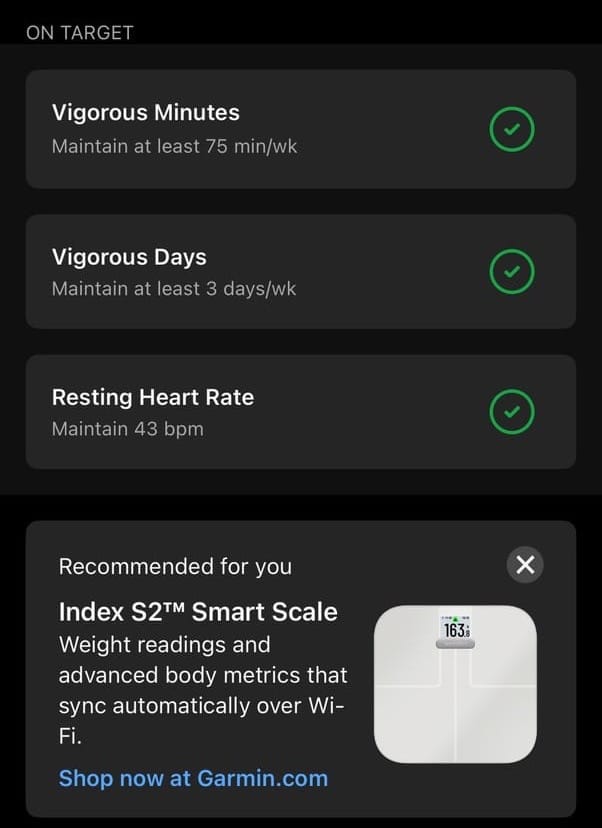
Garmin fitness age and btw, you should buy a smart scale...
✅ Pros: Resting heart rate is an excellent indicator, and activity intensity is something you can actively improve.
❌ Cons: Without a Garmin scale, body fat is estimated from BMI — a crude proxy that can’t distinguish between a muscular individual and someone with excess fat. Garmin could pull better data from Apple Health, but apparently chooses not to.
⭐ Rating: 7/10 — more flexible and motivating than version 1.0, but I don’t fully trust the accuracy of smart scale body fat measurements.
💍 Oura Cardiovascular Age
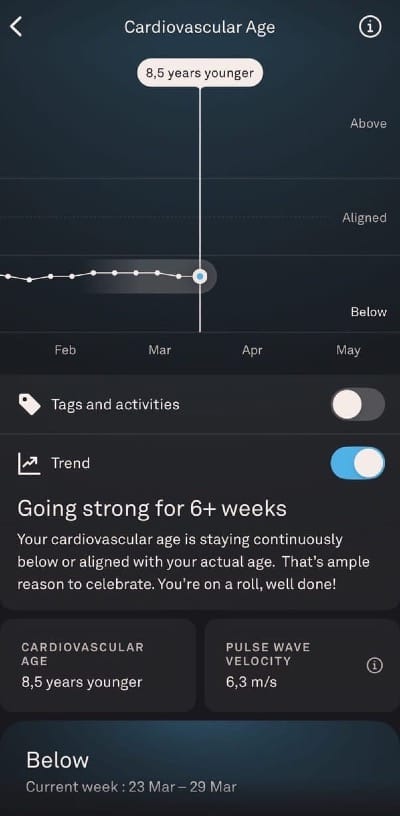
Oura focuses on arterial stiffness via an estimate of Pulse Wave Velocity (PWV). As arteries stiffen with age, the pulse wave travels faster — and that correlates with cardiovascular risk.
It reports PWV in m/s, along with an age delta (±) and a category (below / aligned / above). The calculation requires 14 nights of data.
My result: category “below” and chrono −9 years
✅ Pros: Arterial stiffness is a clinically recognized independent predictor of cardiovascular events. It’s also a slow-moving metric, which emphasizes what actually matters — long-term trends, not day-to-day noise.
❌ Cons: PWV is still estimated, not directly measured.
Despite the clear conflict of interest, the results suggest that modern algorithms can extract vascular condition from a finger PPG signal with surprisingly high reliability.
⭐ Rating: 8/10 — the best cardiovascular proxy among rings.
Community insight: unusual values or sudden changes have, in some cases, revealed high blood pressure or even indicated an approaching heart attack.


🔗 Whoop Age & Pace of Aging
I’ve already praised the complexity of Whoop Age / Healthspan in my review of Whoop MG.
Whoop uses nine input metrics — sleep duration and consistency, time in heart rate zones (1–3 and 4–5), strength training, steps, RHR, VO₂max, and lean mass. It’s being developed in collaboration with the Buck Institute for Research on Aging.
The Pace of Aging is updated weekly and expresses your aging rate on a scale from −1× to 3×.
My result: 29.7, Pace 0.7× (chrono −7.3 years)
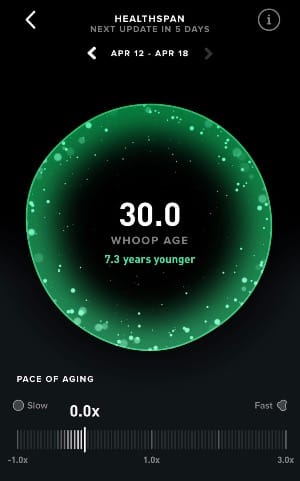
✅ Pros: The most comprehensive set of input data. Pace of Aging responds to interventions better than most other metrics. The Buck Institute is a credible scientific partner (yes, arguably an appeal to authority 😉).
❌ Cons: More inputs ≠ higher accuracy if the inputs themselves are estimates. Methodology transparency is limited. Healthspan is only available in the highest subscription tier.
⭐ Rating: 7.5/10 — the most ambitious approach, but loses points for closed methodology and premium pricing.
💓 Elonga Functional Age
How it works: A standardized 3-minute morning measurement on the forearm. It uses spectral HRV analysis (frequency domain), which distinguishes between parasympathetic and sympathetic activity.
The result answers: how balanced is your autonomic nervous system (ANS) compared to the population average for your age group?
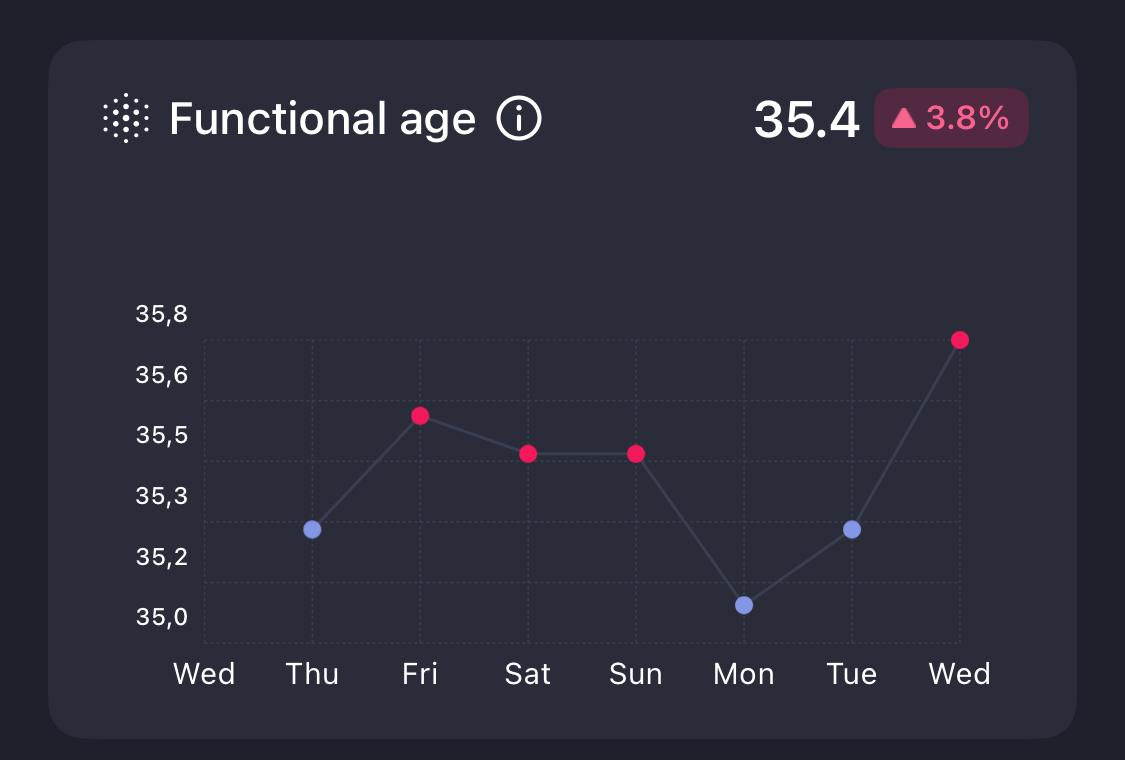
The technology builds on research from mySASY by founder Radim Šlachta.
My result: 35.3 (chrono −1.7)
✅ Pros: The deepest look into the autonomic nervous system among consumer wearables — spectral analysis provides significantly more insight than standard RMSSD. The standardized morning measurement reduces motion artifacts. It’s highly sensitive and quickly reflects fatigue, illness, or overtraining.
❌ Cons: Requires an active daily ritual. It’s more of a daily snapshot than a long-term longevity metric.
⭐ Rating: 8/10 — methodologically solid. Whether comparing to a population average is a feature or a drawback… I’ll leave that up to you.
🧠 Ultrahuman Ultra Age
How it works: Built on three pillars:
- Brain Age — an estimate of glymphatic clearance efficiency during deep sleep
- Pulse Age — cardiovascular status (similar to Oura Cardiovascular Age)
- Blood Age — based on blood biomarkers
The third pillar isn’t available in Europe — Blood Vision currently works only in the US and India.
My numbers: Ultra Age 38 / Brain Age 37 / Pulse Age 39
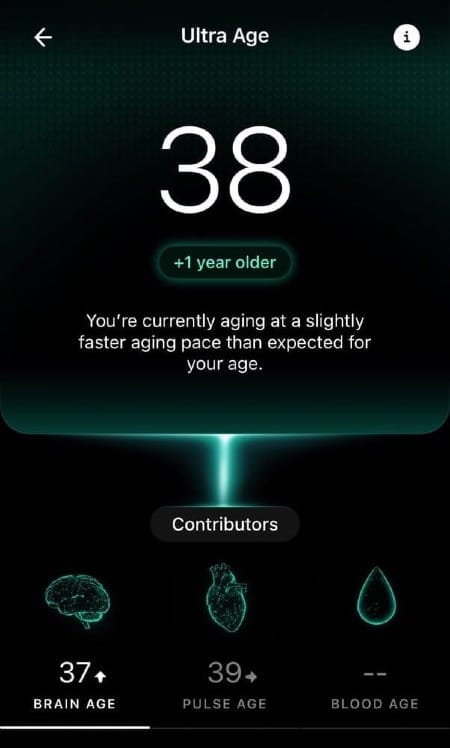
✅ Pros: The most multi-dimensional approach of all — Brain Age adds a neurological perspective that others ignore. The app is also transparent about what’s dragging your score down, similar to Whoop Age.
❌ Cons: The longest chain of derivations — these are derived metrics built on top of other derived metrics.
⭐ Rating: 6/10 — an ambitious concept with decent transparency in sub-metrics, but at times it starts to feel a bit like educated guesswork. These are also fast-moving metrics — the “age” fluctuates more often than, say, with Oura.
Community insight: Brain and Pulse Age already seem to reflect changes across different phases of the menstrual cycle.

🍆 AndroAge (Adam Health)
How it works: A biological age estimate derived from nocturnal erections — Nocturnal Penile Tumescence (NPT).
The sensor tracks erection frequency and total duration overnight (Total Erection Time, TET) and compares it against age-based population averages. NPT occurs naturally during REM sleep as a kind of physiological “maintenance” of vascular and erectile tissue.
Adam Health explicitly states in their documentation: “This is an indicator, not a measure of biological age.”
My result: 43 (chrono +6) — does that mean my penis is older than me?
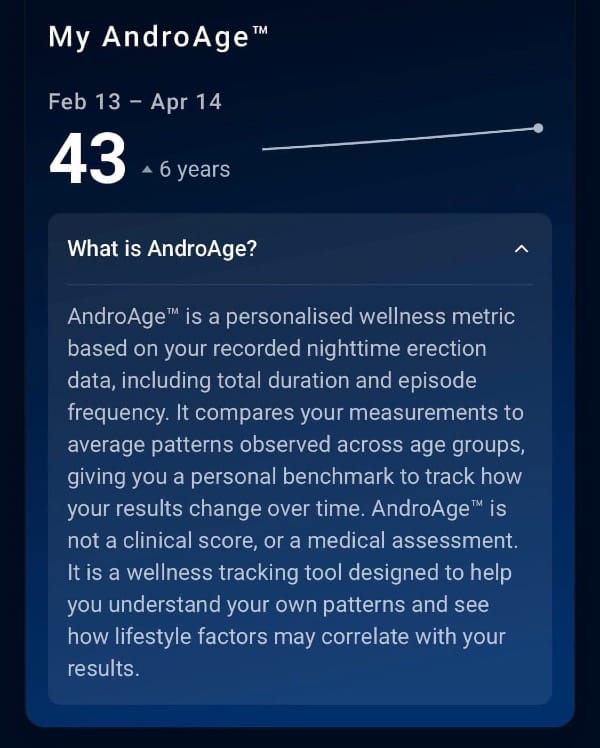
Short answer: not really 🙂 It just means that, based on this specific proxy (NPT patterns), your vascular/neurological signal aligns more with an older population average.
✅ Pros: A unique proxy for vascular and neurological health, independent of psychology. Clinically relevant — urology uses NPT as an indicator of vascular risk.
❌ Cons: Results fluctuate significantly based on sleep quality, alcohol, illness, or training load. Also limited to men.
⭐ Rating: 5/10 — interesting and unique, but high variability and a narrow scope limit its usefulness.
 LORDoftheSMARTRINGS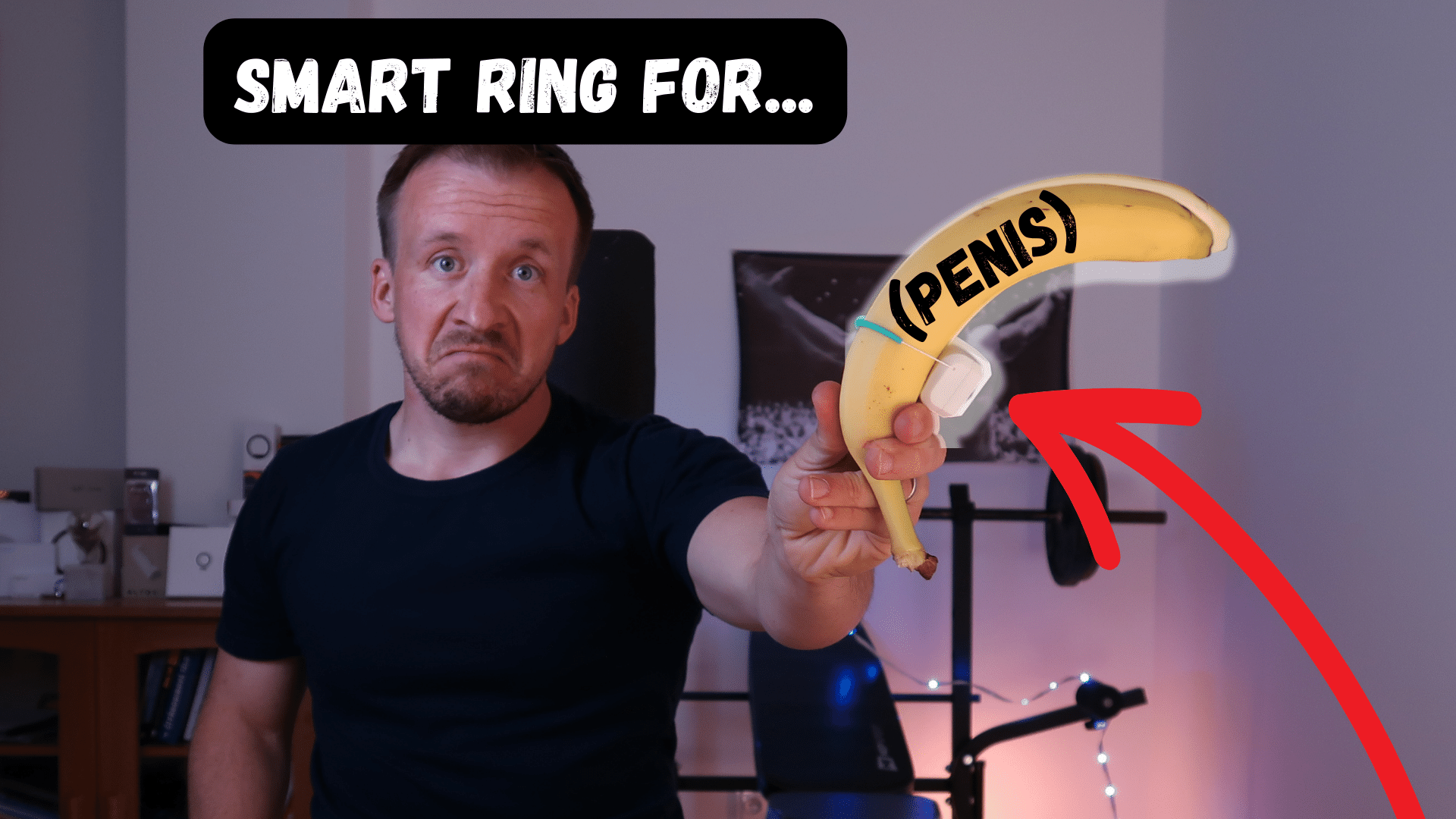
📊 Wearables Age comparison
| Platform | What it measures (proxy) | Result | vs. chrono | Rating |
|---|---|---|---|---|
| Chronological | Date of birth | 37 | — | — |
| Oura | Estimated arterial stiffness (PWV) | ~28.5 | −9 | 8/10 |
| Whoop | 9 metrics – lifestyle + longevity | 29.7 | −7.3 | 7.5/10 |
| Garmin | Intensity, RHR, body fat | 32.5 | −4.5 | 7/10 |
| Elonga | Spectral HRV – functional ANS state | 35.3 | −1.7 | 8/10 |
| Ultrahuman | PPG multi: Brain 35 / Pulse 39 / Blood — | 37 avg. | 0 / −2 / +2 | 6/10 |
| Adam Health | Nocturnal erections (TET) – vascular function | 42 | +5 | 5/10 |
🔍 Note: Age-adjacent metrics without the “age” label
With this article, I’m slightly penalizing manufacturers who haven’t (yet) leaned into the marketing appeal of age-based metrics. One example is RingConn Lifestyle Score.
Since version 3.12, RingConn calculates a weekly score (0–100) based on seven factors: sleep readiness, sleep rhythm, sleep recovery process, morning awakening, exercise intensity, exercise consistency, and daily activity.
The foundation is based on guidelines from the American Academy of Sleep Medicine. Philosophically, it’s similar to Whoop Healthspan — just without the longevity branding and without a subscription.
 LORDoftheSMARTRINGS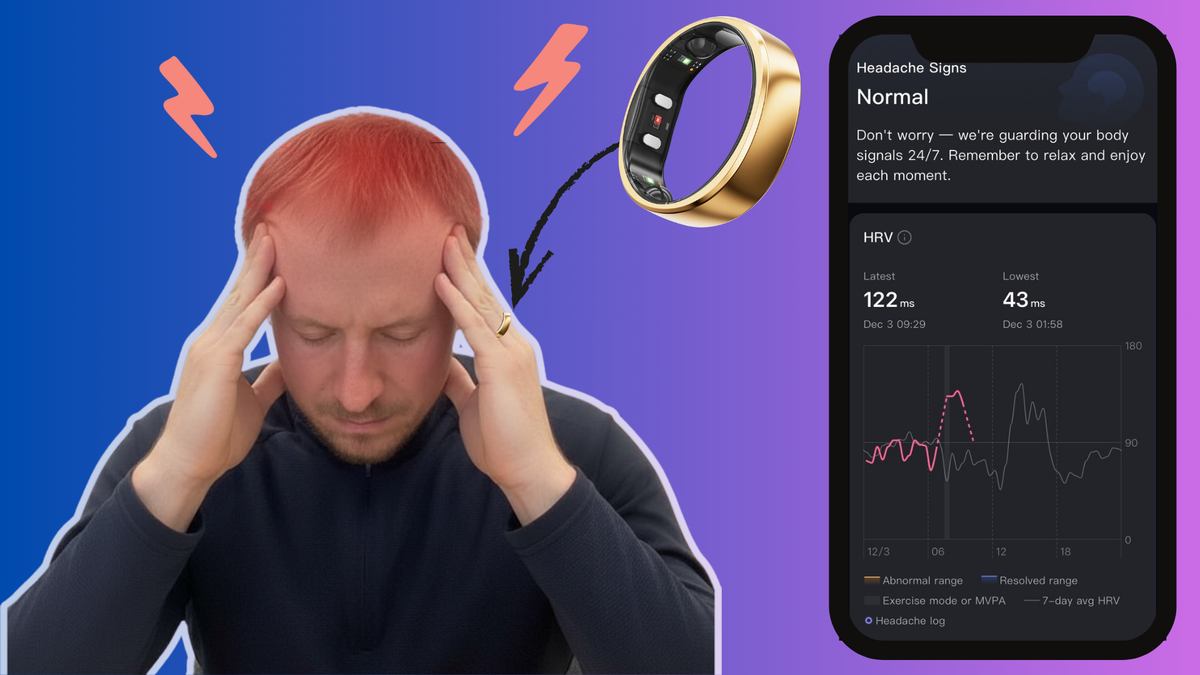
🧠 A more “real” Brain Age?
A study from the University of California suggests that EEG-based devices (headbands, headphones) could provide a more accurate estimate of “brain age” — by analyzing brain waves during sleep rather than relying on indirect proxies like wearables do.
The key finding: if brain age estimated from sleep EEG exceeds chronological age by 10 years, the risk of dementia increases by about 40%.
 Yue Leng, MBBS, Ph.D.
Conclusion
The most important takeaway: “Take age metrics with a grain of salt.”
Focus on trends, not absolute numbers.
If your Garmin Fitness Age has been going down for three months → you’re (probably) training well.
If your Oura Cardiovascular Age is steadily rising → your lifestyle likely needs attention.
These metrics aren’t measuring age — they’re reflecting direction. And direction is what actually matters.
So, which age metric do you personally find useful — and actually trust?