Ultrahuman Home & Air – What’s New
Ultrahuman is trying to connect bedroom environment data (like CO₂, noise, and light levels) with biometrics from the Air smart ring. The new Ambient Sleep Score aims to highlight how your sleep might be affected by your surroundings — though its interpretation still has some rough edges.

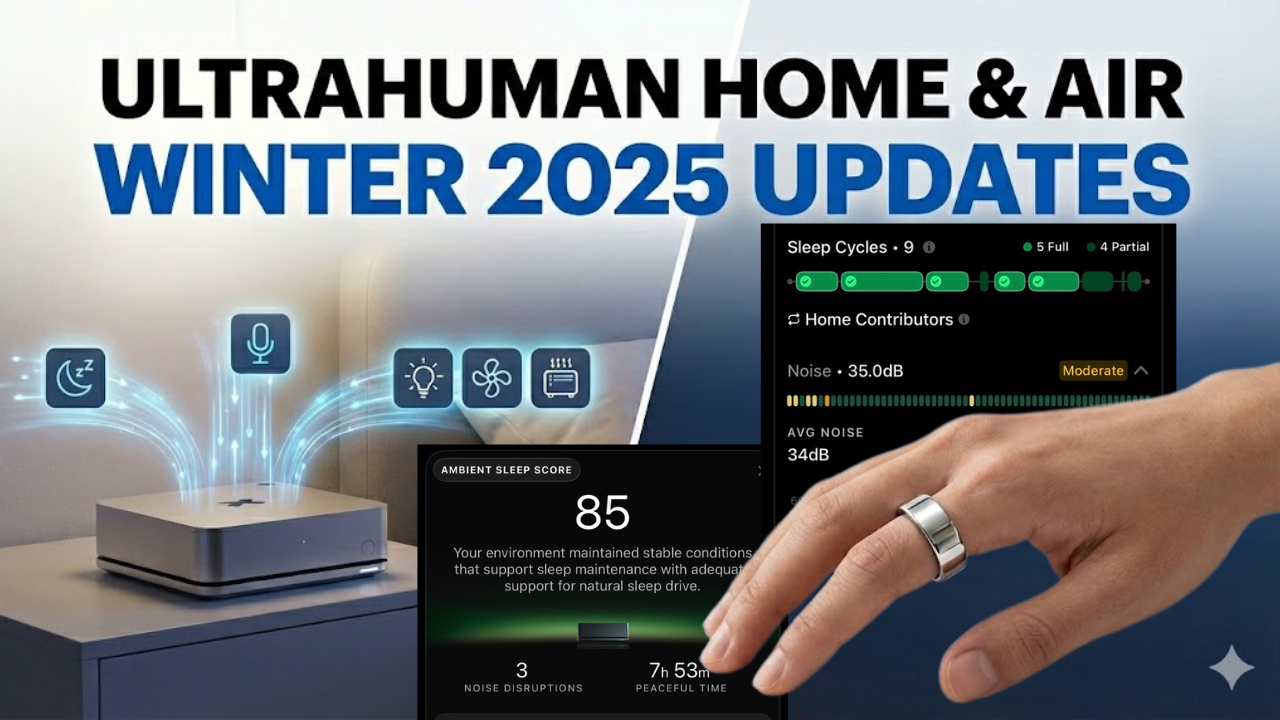
I’ll admit it — after years of tracking wearable tech trends, not much truly excites me anymore. But I can’t shake off my fascination with one bold idea from the Indian company Ultrahuman: the attempt to merge environmental data (via the Ultrahuman Home) with body metrics (via the Ultrahuman Air smart ring).
And let’s not even get into the fact that I’m currently wearing a CGM and have uploaded my latest bloodwork into the same app — yes, Ultrahuman.
By the way, this isn’t the first time I’ve written about Ultrahuman Home.
 LORDoftheSMARTRINGS
And if you’ve read my previous takes, you know Ultrahuman made some pretty big promises — maybe too big.
It seems that during development, they realized that the beautifully clean graphs showing correlations between environmental and physiological data (like bedroom temperature vs. sleep score) just don’t hold up that well in real-world conditions.

Still, Ultrahuman isn’t backing down — and the app continues to evolve.
In this article, we’ll take a closer look at:
- The new Ambient Sleep report
- How Home data blends into sleep tracking
- What “Respiratory Health” in app is.
- And… what if you don’t have the Home device? Are you missing out?
Let’s dive in 💥
Ambient Sleep
Ambient Sleep is a new tile found under the Ring tab — though you can also access it from the Home section, of course.
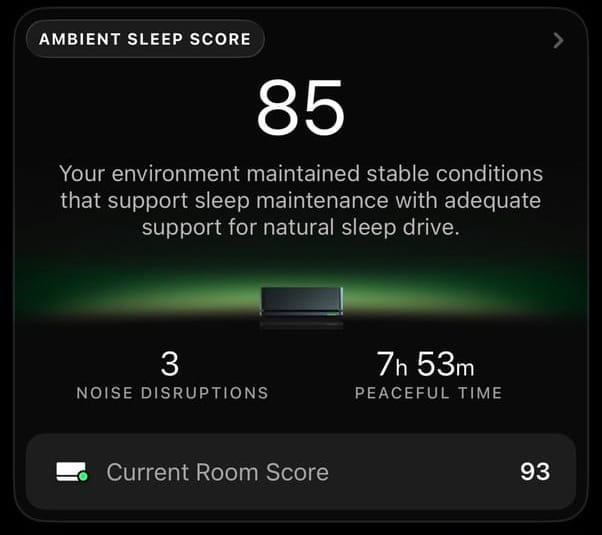
At the center is the familiar 0–100 score, which reflects the quality of your sleep environment — including noise, light, and air conditions. The Ambient Sleep Score report includes:
- Sleep Duration – tracked by the Air ring
- Contributors to the score:
- 🌡️ Temperature Stability
- ☮️ Peaceful Time
- Bright Periods
- Air Freshness
- Noise Disruptions
• Respiratory Health – essentially a new standalone feature (see next section)
• Environmental Noise – not just tracking, but also classifying (!) sounds like Baby Cry, Children Shouting, and even Singing:
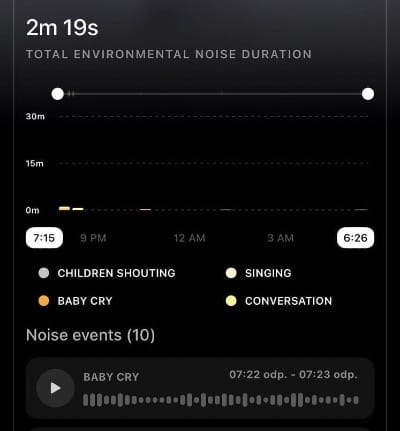
- Environmental Contributors.
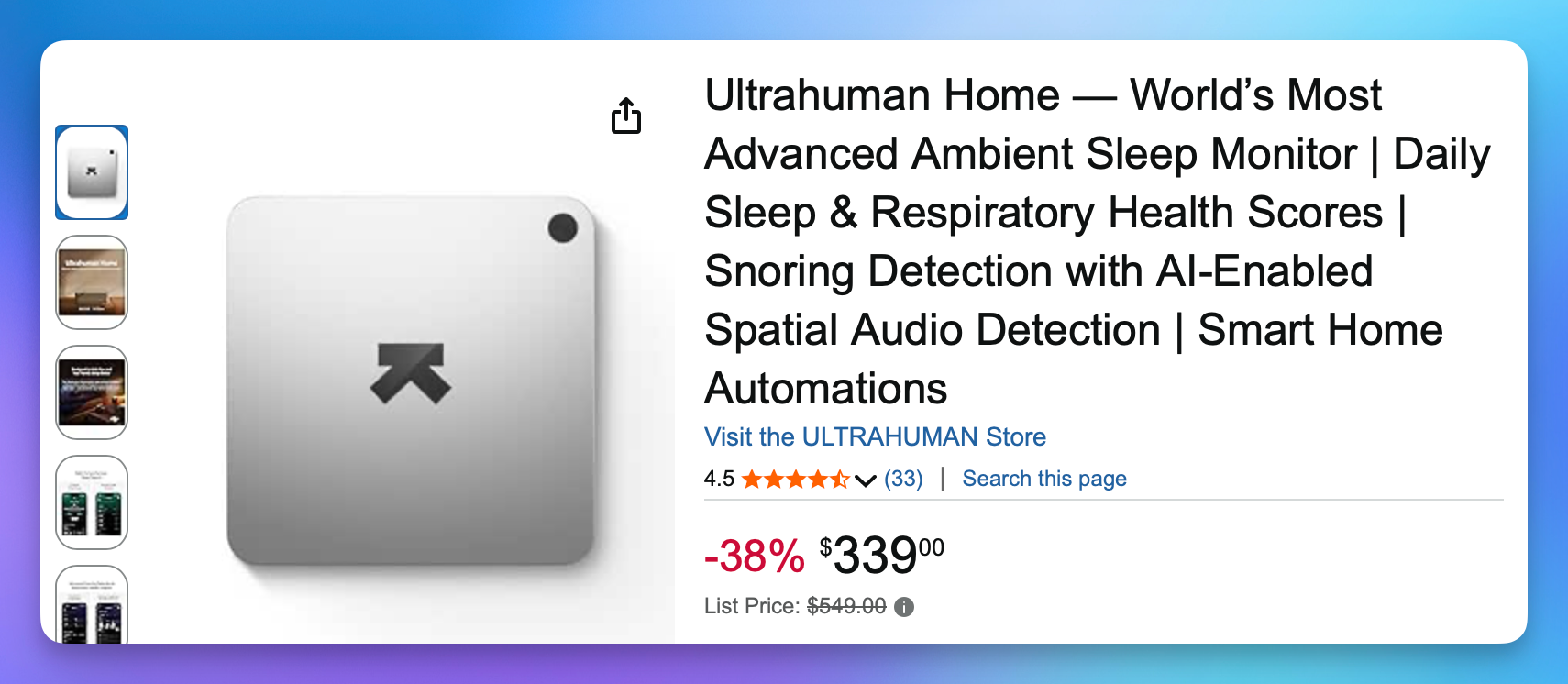
You can get UH for good price currently also on Amazon – here.
Respiratory Health
Respiratory Health is a relatively unique metric (0-100) that analyzes nighttime sounds (Environmental Noise) and filters only Snoring, Coughing, and Heavy Breathing. When these sounds are detected, the score is reduced. This adds another data layer to overall sleep quality assessment and may also help flag issues such as sleep apnea (snoring) or allergies and illness (coughing).
I currently see one major limitation with this metric. I share my bedroom with other people, and Ultrahuman Home cannot distinguish whether the cough is mine—or even whether I am actually sleeping in that room at all.
It also feels like Ultrahuman is fixing bugs on the fly. For example, events sometimes disappear. Below are screenshots from the same day (December 15), captured on different days, showing inconsistencies.

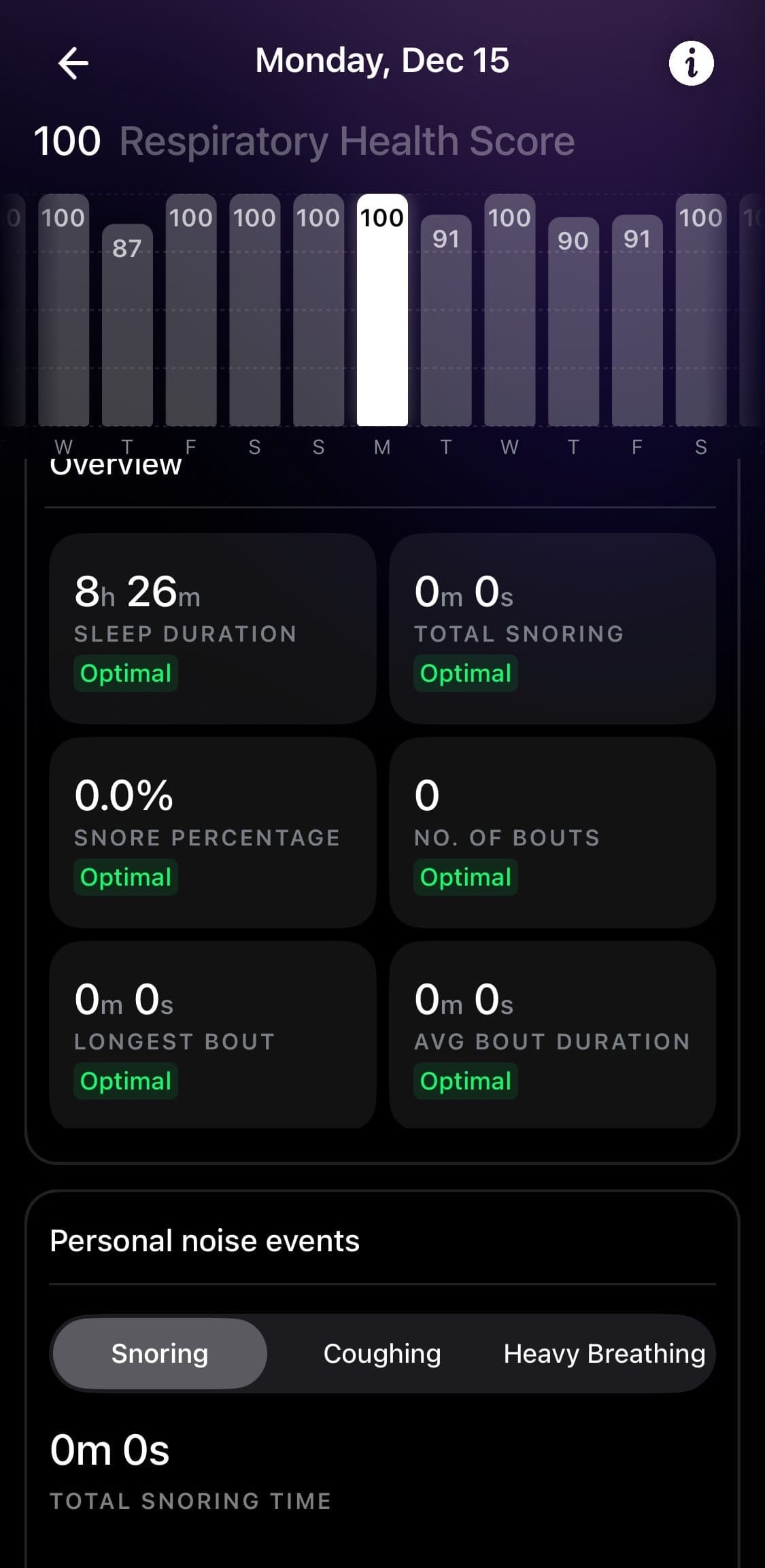
Or maybe not — on the left is Respiratory Health measured via the phone, on the right the same metric captured by Ultrahuman Home...
Respiratory Health without Ultrahuman Home?
If you don’t own Ultrahuman Home, Ultrahuman still offers a way to track your respiratory health. In collaboration with Sleep Cycle, they introduced a Power Plug that works as follows:
- You activate it directly within the Power Plugs section.
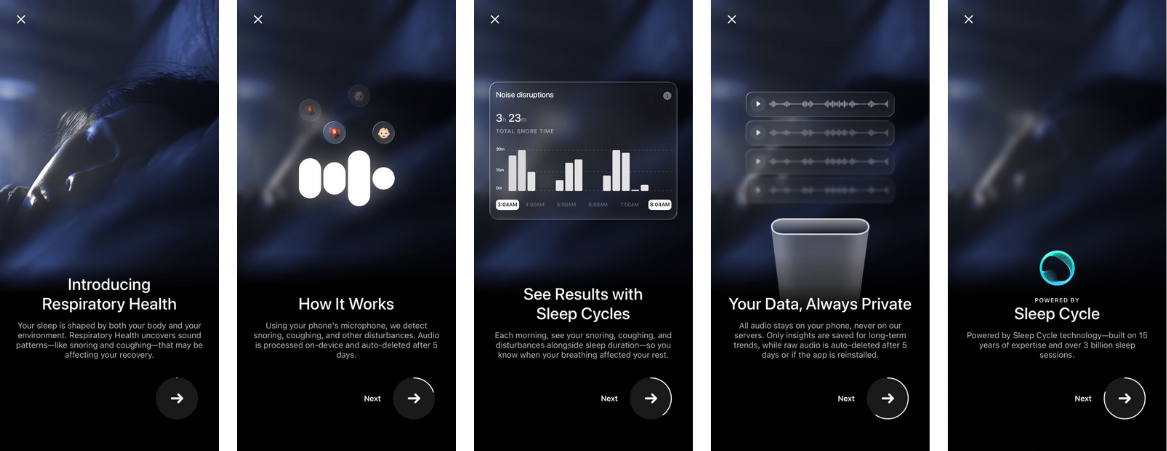
- Before falling asleep, you activate it — your phone needs to be placed near the bed and granted microphone access.
- In the morning, you turn it off again, effectively getting the same results as when using Ultrahuman Home.
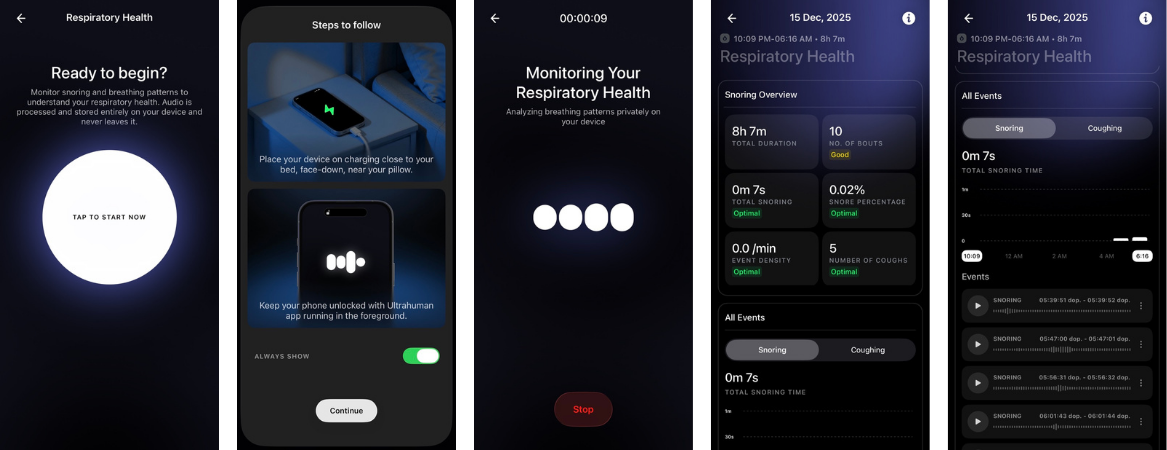
It’s worth noting that this is a paid Power Plug (3,99 Euro per month) and it requires your phone to be placed next to the bed — similar to how the Sleep Cycle app works.
Crossovers and real-world examples
In the past, I reported cases where the app flagged a drop in deep sleep, with elevated CO₂ levels as a possible cause. I wasn’t able to reproduce a similarly clear example this time. Still, I can share a few practical scenarios.
Noise and awake time
I share a room with my kids, who sometimes cry during the night. Below is an example where this kind of noise clearly woke me up.

Bedroom temperature 👎
One feature of the Ultrahuman app is that it automatically suggests tags based on data from the ring. Most commonly, this includes Cold Bedroom or Hot Bedroom, triggered by changes in your body temperature.
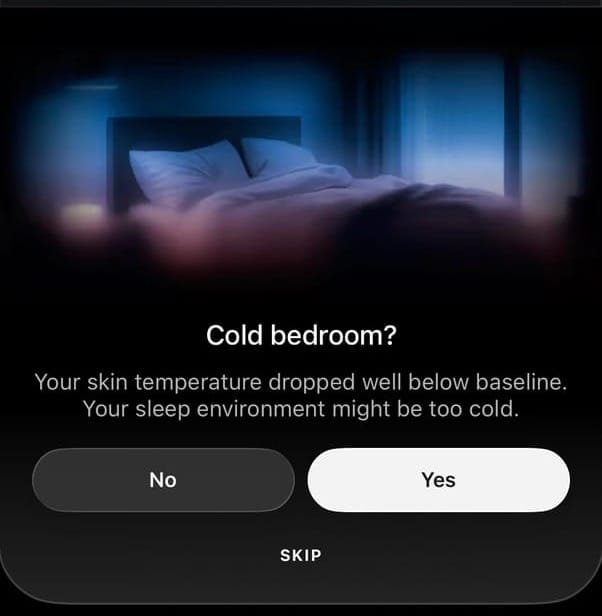
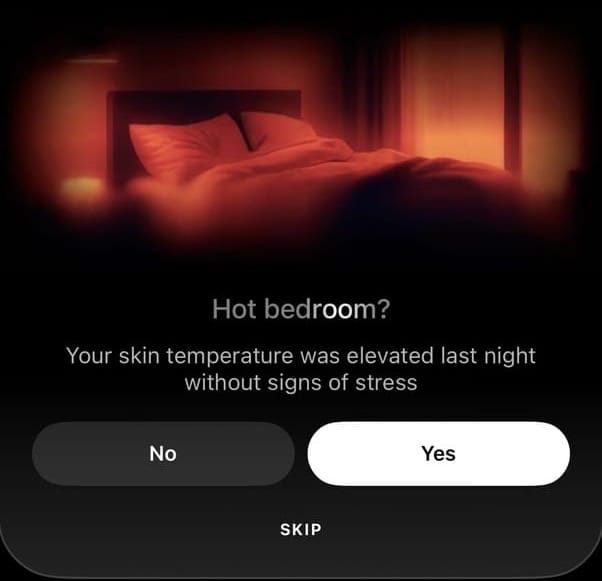
Cold or Hot bedroom in Ultrahuman
I assume the UH team has already thought about this, but if you own Ultrahuman Home, the ecosystem already has access to bedroom temperature data and wouldn’t need to ask the user — or at least could factor the measured room temperature into the suggestion.
Dashboard aka Snapshot 👍
The most useful metric from Ultrahuman Home, in my view, is CO₂ — simply put, how stale the air in my bedroom is. Do I want this front and center? Yes. And that’s exactly what the customizable Snapshot in the UH app is for.
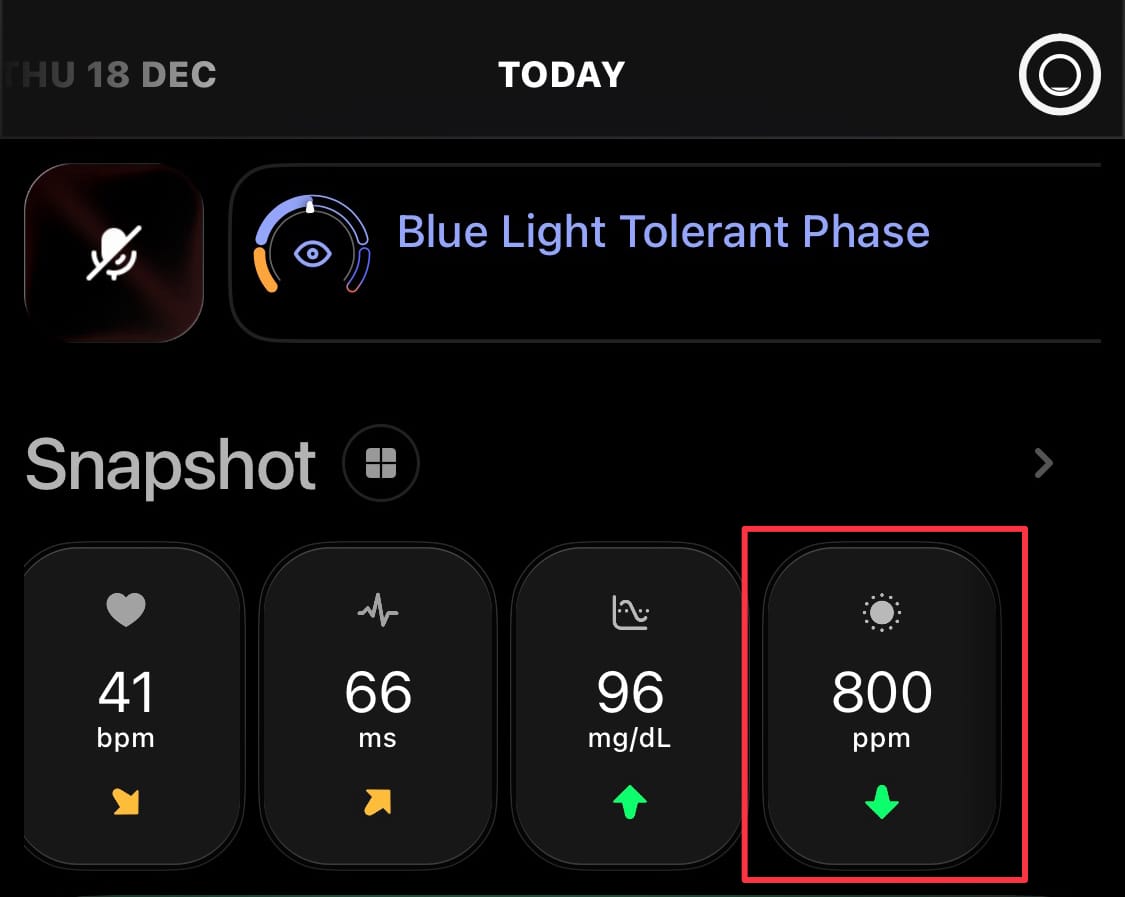
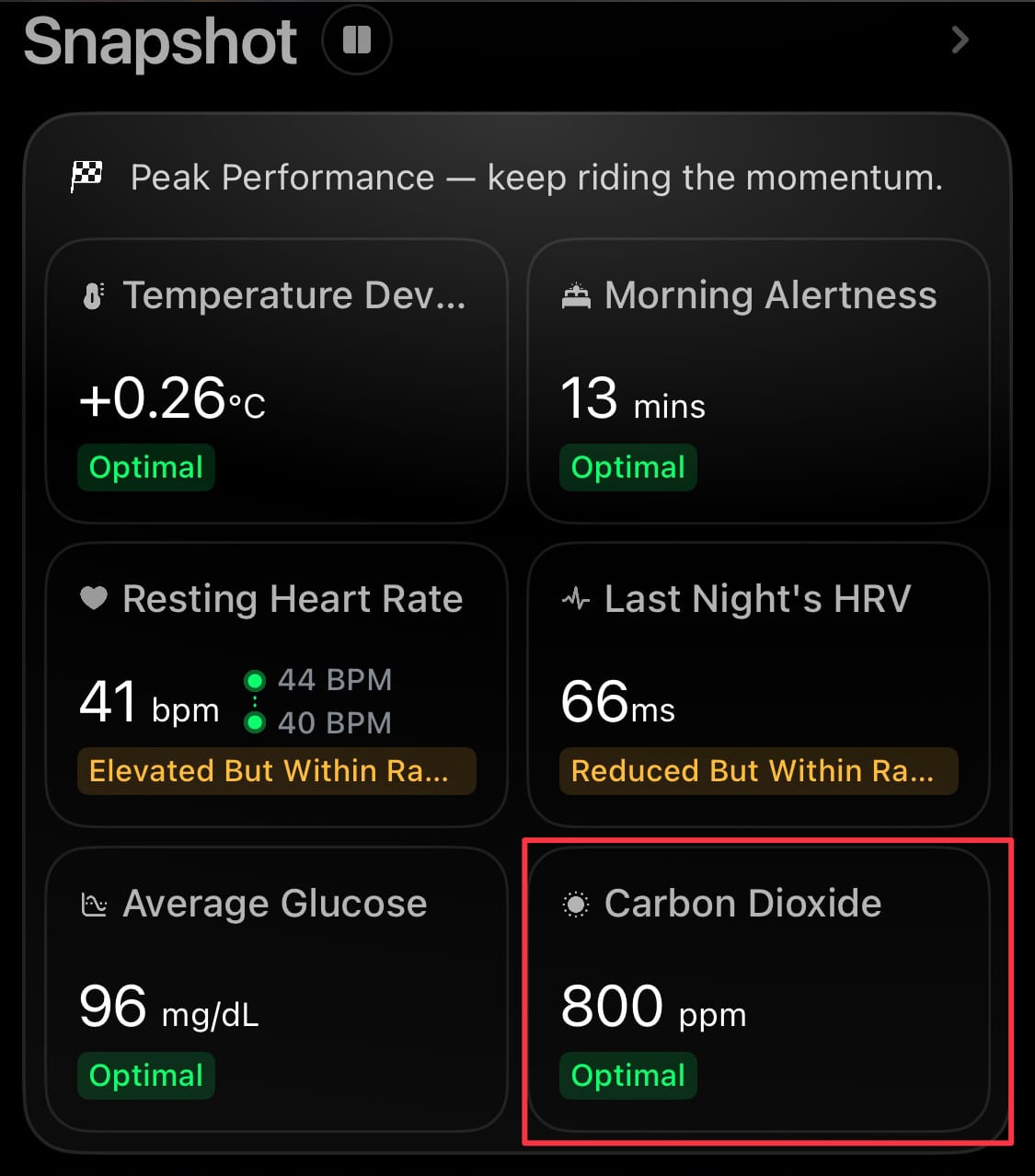
Two ways to see Snapshot
Similarly, you can customize the Snapshot to show other data points as you like — including metrics from CGM and other sources.
Shared bedroom 👎
As mentioned earlier, one limitation Ultrahuman Home currently can’t handle is identifying who in the bedroom was snoring, coughing, or breathing heavily.
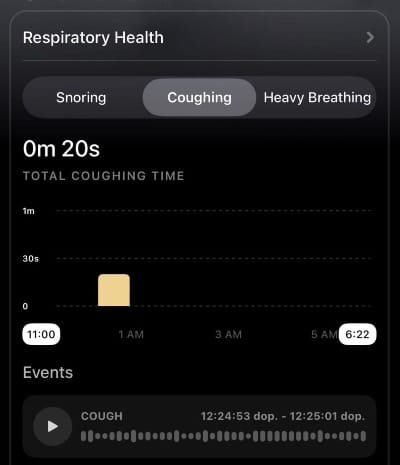
Similarly, the Ultrahuman platform can’t actually tell whether I slept in the room where UH Home is placed at all. That may be why there’s an option to “Delete sleep.”
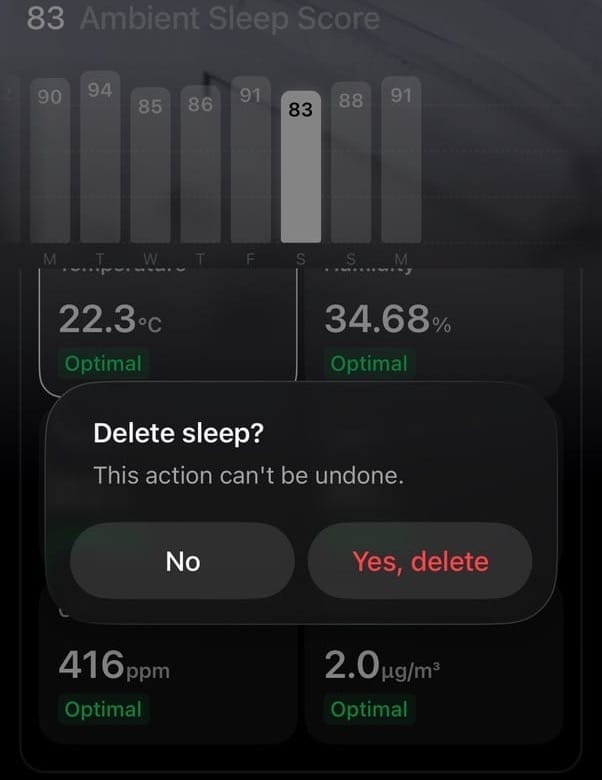
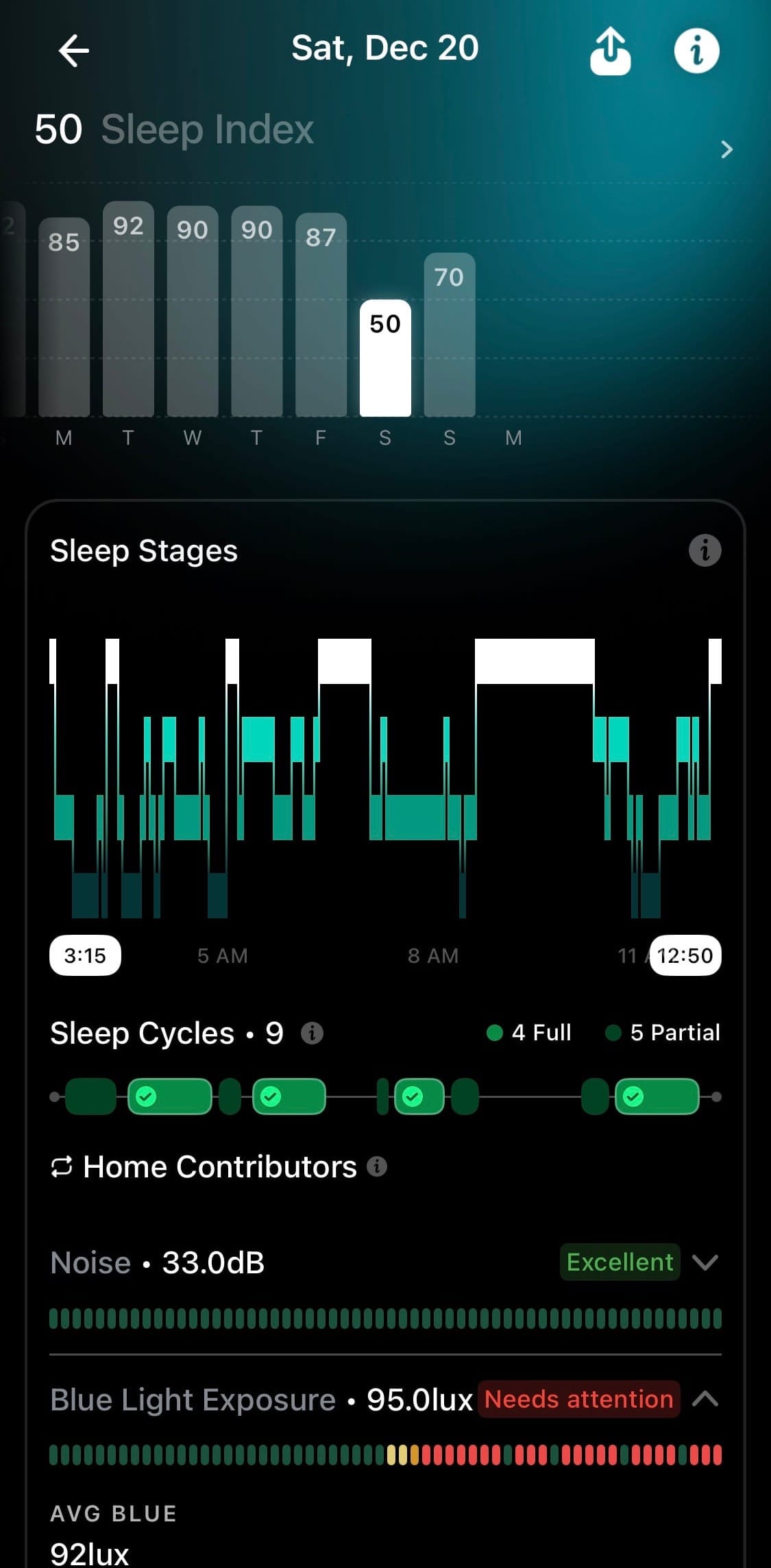
Delete Sleep
This action removes the sleep entry from the Ambient Sleep Score. However, Home Contributors still remain visible within the Sleep Index, which doesn’t make much sense.
API & connectivity
I looked into whether Home data can be accessed in the same way as ring data — via an API. At the moment, this isn’t possible.

And if you ask what about smart home, there is also no progress:
Conclusion
Some of the examples I mentioned may sound trivial. Still, I believe that Home data — depending on your habits and bedroom environment — can offer genuinely useful insights. I’m even considering deliberately creating a suboptimal sleep environment — for example bright light, noise, or poor ventilation — to see whether the app can actually guide me toward improvements.
The main strength of Ultrahuman Home, in my view, is that it tracks factors we often don’t notice (high CO₂ levels, bedroom light), can’t see (dust, temperature), or simply don’t remember (noise during the night) — yet all of them can meaningfully impact sleep quality.
ltrahuman Home is currently a strong buy thanks to a 10% discount.