Elonga, Amazfit, Polar a Whoop – which one is the most accurate?
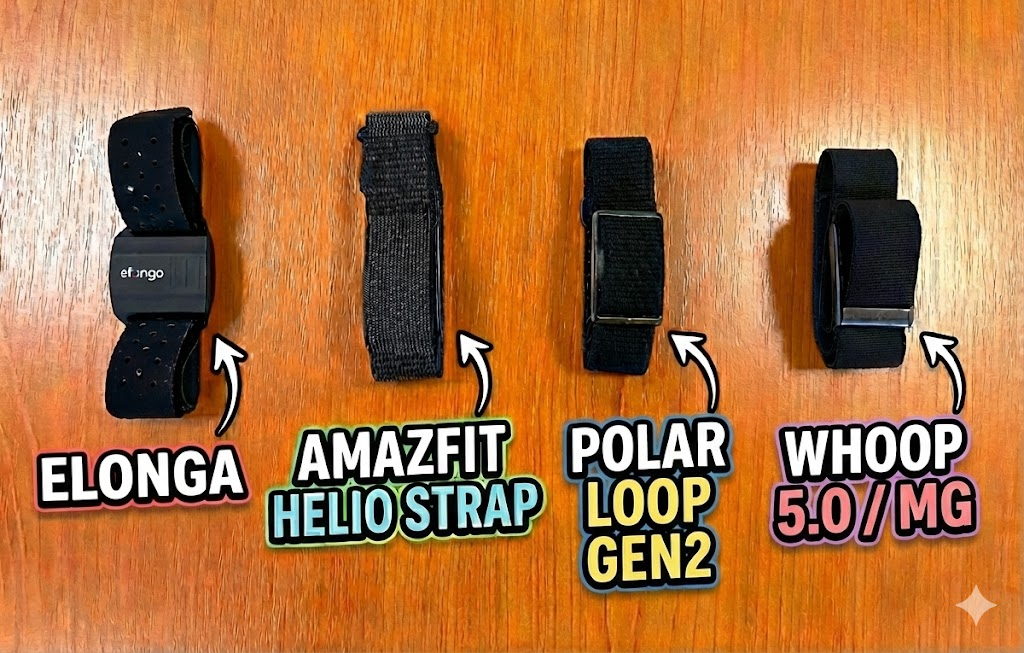
In this article, I compare optical heart rate measurement in screenless bands from Elonga, WHOOP, Polar, and Amazfit against a chest strap with ECG-level accuracy. Same exertion, same methodology, same conditions. Or are they? And is it even possible to simulate the same conditions?

Completely honestly – if I saw the title of this article on another site, I’d probably think: “What kind of nonsense is this? Just another apples-to-oranges comparison.”
But it’s not. Today we’ll focus on the purest metric these smart, “display-less” bands measure – heart rate. In this test, I decided to do a straightforward comparison of the quality of optical sensors.
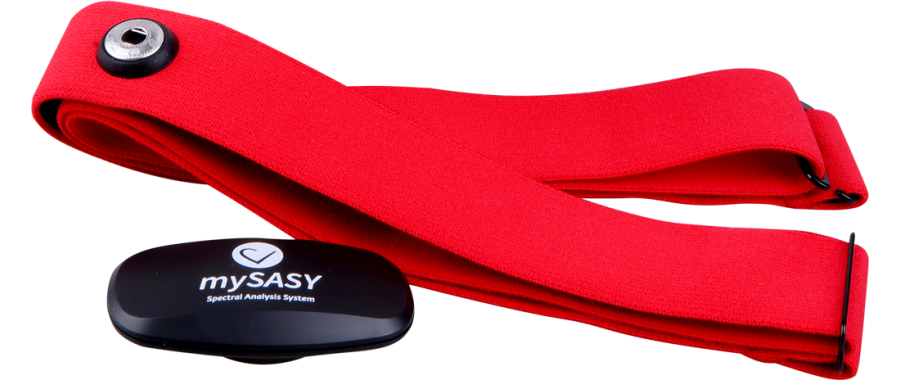
As an uncompromising judge (reference), I used a chest strap.
In this article, you’ll find out:
- What are the specific features of the tested wristbands.
- How optical heart rate measurement actually works (and where it fails).
- How I tested it – and why I chose rowing in particular.
- The hard data: How it all turned out when comparing the curves to the ECG-accurate chest strap.
So let’s dive in 💥
Smart Bands
Screenless smart bands are experiencing something of a renaissance. Their main advantage is discretion – they track heart rate, HRV, temperature, and (estimate) sleep, all without bombarding you with notifications. Some can even discreetly vibrate to signal: “Time to get up! Time to train!”
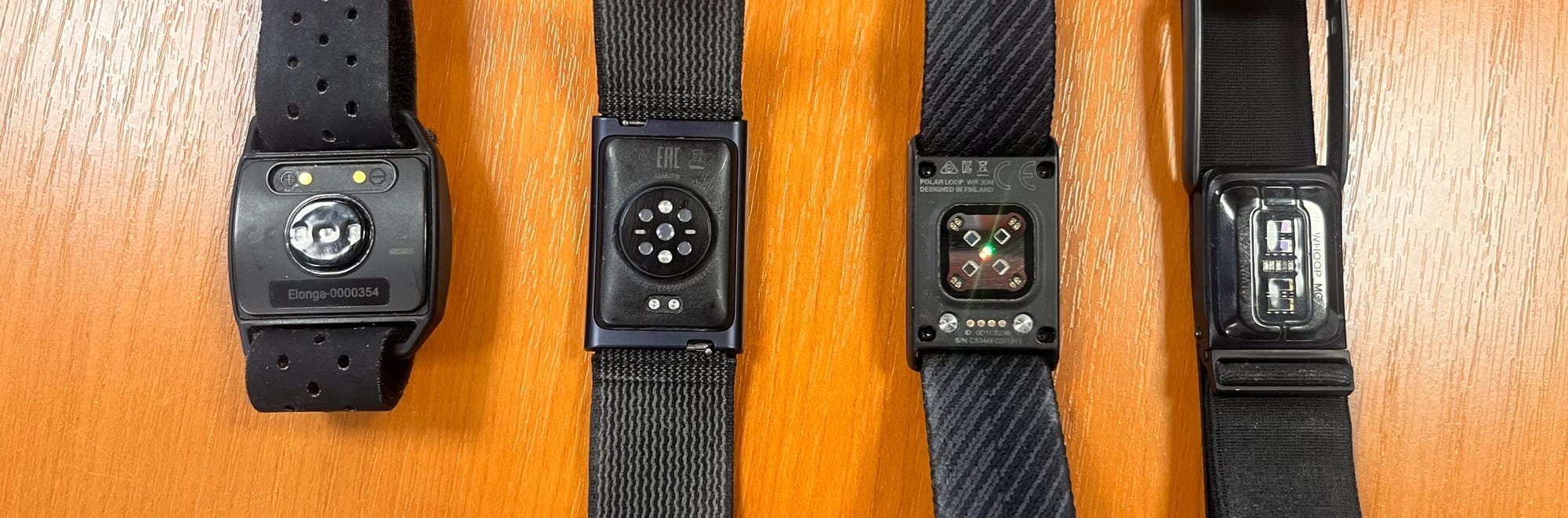
Their downside is usually the lack of built-in GPS and the reliance on a phone for most functions. For this test, I selected the following devices:
- Elonga: A Czech contender – well, sort of. What makes Elonga unique is the app and data interpretation, which are both Czech-made. The hardware itself is essentially an OEM sensor, which isn’t necessarily a bad thing if the optics are high-quality and the firmware well-tuned.
More here: #️⃣elonga - WHOOP 5.0 (MG): A global phenomenon known for its cool factor, premium feel, monthly subscription model, and focus on strain and recovery.
More here: #️⃣whoop - Polar Loop Gen2: A representative of the old guard from the Finnish legend of sports tracking. Polar has long been synonymous with heart rate accuracy.
More here: #️⃣polar - Amazfit Helio Strap: Amazfit’s attempt to break into the minimalist tracker segment.
More here: #️⃣Amazfit
Theory: How Heart Rate Monitoring Works (PPG)
To understand the results, we need to look under the hood. Optical heart rate monitoring (PPG – photoplethysmography) has become the standard, but it comes with physical limitations.
The sensor uses LED lights (most commonly infrared and green) to shine light through the skin. The light scatters through the tissue, and part of it reflects back into a photodetector. Since blood absorbs light differently than surrounding tissue, the sensor can “see” changes in blood volume with each heartbeat.

The Core Problem: PPG doesn’t measure the heart’s electrical impulses directly (like a chest strap does), but instead tracks color changes beneath the skin. While this works very well under static conditions (like during sleep), physical activity introduces several sources of interference:
- Motion artifacts: The sensor moves microscopically against the skin.
- Pressure changes: Muscle contractions under the band alter blood flow.
- Sweat: Moisture affects how light is refracted.
Test Methodology: Why Rowing?
For this test, I didn’t choose running, where movement is rhythmic and predictable. Instead, I opted for rowing. At first glance, it may seem like an easy task for optical sensors — but not at all. Rowing involves intense arm movement, frequent muscle contractions, and occasional changes in grip.
Device Placement (Real-world scenario):
This wasn’t a lab-controlled test. The goal was to simulate how real users actually wear the bands:
- Elonga: Inner side of the forearm
- WHOOP MG: Biceps band (upper arm)
- Polar Loop Gen2: Wrist
- Amazfit Helio Strap: Wrist
- Reference: Chest strap (ECG accuracy)
Comparison Results (Bands vs. Chest Strap):
Below is an interactive chart of the recorded values. The black line represents the reference chest strap. The closer the colored lines are to the black one, the more accurate the optical sensor.